Cili: Bali's Sacred Symbol of Beauty and Fertility Explained
Cili: Understanding Bali's Sacred Symbol of Beauty and Fertility
When a Balinese person describes someone as "jegegne cara cili" — as beautiful as a Cili — they are offering one of the highest compliments in the local culture. Yet despite its prominence in Balinese life, this distinctive figure remains largely unknown outside the island's spiritual and artistic circles. Cili represents far more than aesthetic beauty; it embodies core aspects of Hindu-Balinese belief, agricultural cycles, and artistic tradition.
The Sacred Role in Hindu-Balinese Ceremonies
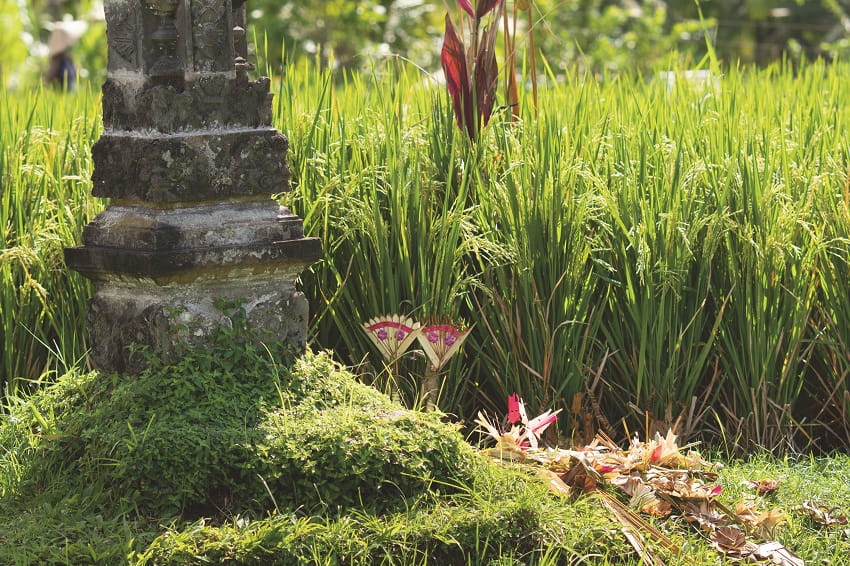
In Balinese Hindu practice, Cili holds particular significance during rituals honoring Dewi Sri, the goddess of rice and prosperity. The figure is traditionally deployed during the Mabiyukukung ceremony, performed when rice plants reach three months of maturity. At this stage, farmers describe the rice as being "pregnant" — a poetic metaphor that directly connects the crop's growth to feminine fertility and the divine protection of Dewi Sri.
These ceremonies are more than agricultural rituals; they function as expressions of gratitude for the blessings of abundance that sustain farming communities across Bali. The use of Cili in these ceremonies reinforces the spiritual contract between the physical and divine worlds, grounding religious practice in the rhythms of the harvest calendar.
Construction and Visual Characteristics
Crafted primarily from young coconut leaves (janur), palm fronds (lontar), ground rice cakes, and clay, Cili figures often feature striking colors — red, yellow, and black — that make them visually distinctive in temple settings. The figure itself is unmistakably feminine: a pointed face crowned with an elaborate headdress, bent arms adorned with large ornamental earrings called subeng, a distinctly slender waist, and lower garments that obscure the legs.
The complexity of Cili varies depending on its ritual purpose. Simpler versions appear in sasap, woven janur and lontar offerings used for purifying newly created objects. The most intricate and complete forms emerge within lamak offerings, elaborate decorative pieces that showcase the artisan's full skill. Among the most historically significant examples is a fired-clay Cili housed in the Bali Museum, discovered at Pura Belanjong in Sanur and dating to the Majapahit era.
From Ritual to Contemporary Artistic Expression
Beyond the temple and ceremonial context, Cili has become a foundational motif in Balinese artistic production. The figure appears frequently in traditional textiles, particularly in endek weaving, where her characteristic elongated form and elegant proportions feature prominently in pattern design.
Balinese artisans — both traditional craftspeople and contemporary artists — continue to carve and paint Cili figures, adapting her form while maintaining her essential characteristics. These pieces showcase her decorative potential: extended limbs, intricate headdresses, and flowing lines that translate beautifully across different media.
This artistic persistence reveals a fundamental truth about Balinese culture: the inseparability of religion, aesthetics, and daily life. Themes of fertility, beauty, and feminine divine power cycle through generations of artistic expression, ensuring that traditional symbols remain alive and relevant within modern contexts.
Originally published by NOW! Bali
Source: NOW Bali