Preserving Bali's Oldest Traditions in Ancient Aga Villages
Preserving Bali's Oldest Traditions: Inside the Bali Aga Villages
While much of Bali's cultural identity traces back to the Majapahit Empire's arrival in 1343—bringing with it gamelan orchestras, wayang puppet theater, and Hindu-Javanese artistic traditions—an older, indigenous Bali continues to thrive in remote mountain villages. The Bali Aga, the island's original inhabitants, have maintained customs and rituals that predate the Majapahit conquest by centuries, offering visitors a rare glimpse into the island's ancient period.
According to census data from the 1980s, approximately 38 distinct Bali Aga villages dot the island. What makes these communities remarkable is their remarkable resistance to external cultural influences, largely due to their geographic isolation in mountainous and difficult-to-access regions. Rather than blend with later Hindu-Javanese traditions, these villages have functioned as living museums, preserving the beliefs, customs, and practices of pre-Majapahit Bali.
Trunyan: Death Rituals in Isolation
Perched on the eastern shores of Lake Batur in Kintamani, Desa Trunyan stands as perhaps the most visually dramatic Bali Aga village. Until recent decades, the village was accessible only by boat—a geographic isolation that proved crucial in preserving its distinctive traditions.
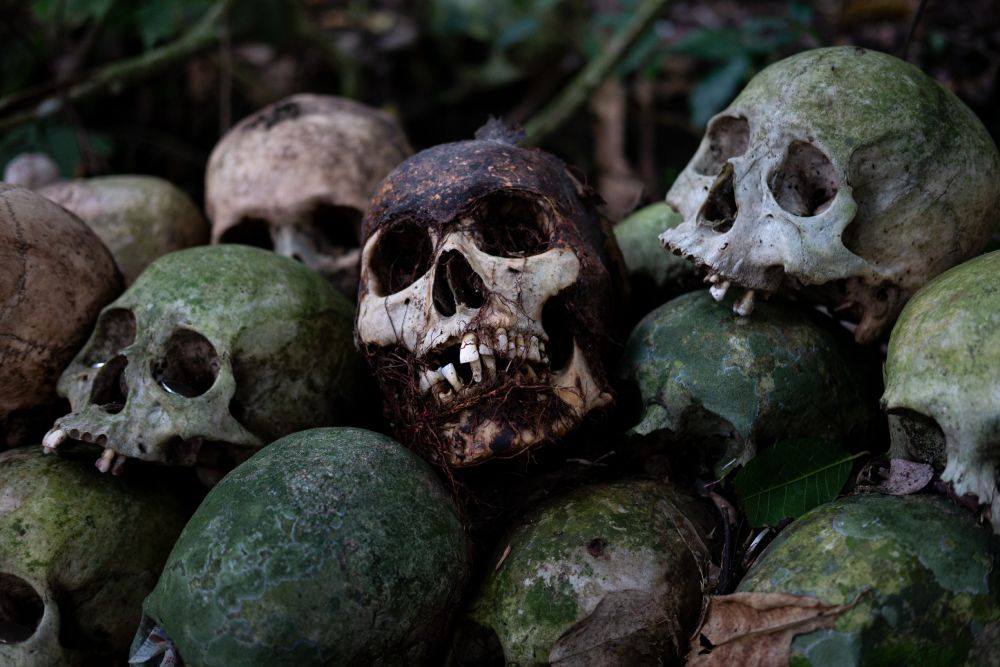
Trunyan is best known for its unique approach to death rituals that diverges sharply from Bali's famous ngaben cremation ceremonies. Rather than cremating their dead, Trunyan residents transport bodies by boat to a separate cemetery located 15 minutes away. There, corpses are laid above ground and covered with bamboo cages called ancak saji, positioned beneath a sacred tree. This practice, maintained for generations, reflects ancient beliefs about the relationship between the deceased and the natural world that predate Hinduism's influence on the island.
"These are the Bali Aga, the indigenous Balinese, considered the original inhabitants of the island. Over centuries, these communities managed to resist the cultural influences of the Majapahit, in many cases due to their isolated geography and distance."
Historical Context: Before the Majapahit
Before 1343, Bali was ruled by the Bedahulu Kingdom (8th-14th centuries) under the dynasties of Warmadewa and Jaya. This period, centered around Pejeng in central Bali, produced significant archaeological sites including Goa Gajah (the Elephant Cave), Yeh Pulu, and Gunung Kawi. The Bali Aga represent a living continuation of this ancient period—a cultural thread connecting modern visitors directly to pre-Majapahit Balinese society.
A Window Into Ancient Bali
For travelers and cultural enthusiasts, the Bali Aga villages offer an opportunity that extends beyond typical tourism. These communities represent authentic cultural preservation rather than reconstructed heritage. Visitors who venture into these remote pockets encounter genuine traditions—from distinctive architectural styles to ritual practices—that have survived centuries of external pressure and modernization.
The four primary Bali Aga villages open to visitors each maintain distinct characteristics, though all share the fundamental commitment to preserving pre-Majapahit traditions. The combination of architectural uniqueness, ritual practices, and the communities' deliberate resistance to cultural assimilation makes these villages invaluable to understanding Bali's complete historical narrative.
Originally published by NOW! Bali
Source: NOW Bali