Balinese Weaver Preserves Ancient Bebali Textile Traditions
Weaver and Educator: How One Balinese Woman Became Guardian of Bebali Textiles
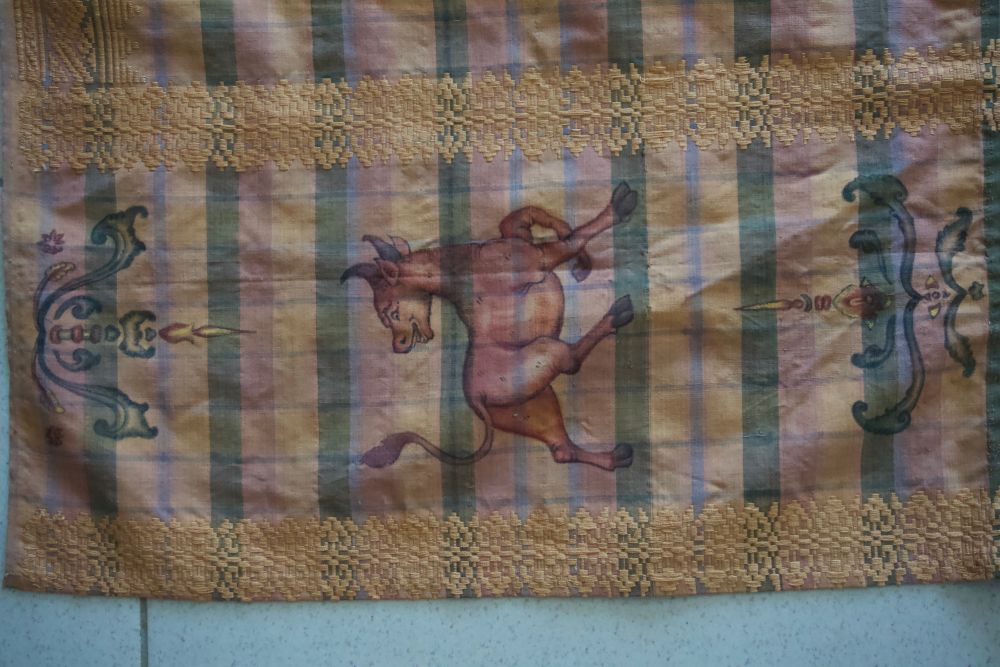
When Ida Ayu Ngurah Puriani graduated with a degree in education, she embarked on an unexpected journey that would reshape her entire career. Armed with little more than a Honda Supra and genuine curiosity, the young Sidemen native set out across Karangasem's villages seeking answers to a question three foreign tourists had posed: what are bebali textiles?
That simple question launched a decades-long quest that transformed Ida Ayu from a schoolteacher into one of Bali's foremost experts on ceremonial weaving—a role she never anticipated but has embraced with infectious enthusiasm and scholarly dedication.
From Classroom Confusion to Cultural Authority
"I had to ask around from house-to-house, weavers-to-weavers, learning from one lontar manuscript to another," Ida Ayu recalls of those early days. She eventually discovered that bebali refers to the woven cloths essential to Bali's life cycle ceremonies—knowledge that would become her life's work.
Growing up in Sidemen, a village renowned for its weaving heritage, Ida Ayu had already woven her first plain belt at age nine under her mother's guidance using a traditional cag-cag loom. Yet weaving never seemed like a viable career path. Instead, she pursued formal education in Singaraja to teach religion, returning to Sidemen for part-time teaching work.
The turning point came quietly: an opportunity to assist researchers studying bebali textiles. What began as casual curiosity evolved into a profound calling. Her contributions became integral to the seminal academic work "Textiles of Bali," co-authored by scholars Urs Ramseryers, Brigitta Huaser-Schaublin, and Marie-Louise Nabholz-Kartaschoff.
Following Natural Dyes Into the Jungle
As Ida Ayu deepened her textile knowledge, she realized that understanding woven cloth meant understanding everything surrounding it: rituals, spiritual beliefs, and crucially, the natural materials themselves. This insight led her away from looms and into Bali's forests, riversides, and coastlines in search of indigenous dye plants.
"These exploratory trips never felt like work. She always described them as a kind of melali—a small, meaningful escape."
Her approach to learning proved infectious. Students eagerly joined these botanical expeditions. Ida Ayu would charter a bemo van for field trips, gather plants with her pupils, then return to school to experiment with natural dyes—transforming academic lessons into lived experience.
Preserving Tradition in a Changing Economy
As her expertise grew, so did her sense of responsibility toward Bali's weaving heritage. Ida Ayu noticed troubling trends: fewer young Balinese were choosing weaving as a livelihood, viewing hospitality and tourism-related work as more economically promising.
While continuing to teach religion, she strategically found ways to integrate weaving knowledge into her curriculum, making traditional practices relevant and valued for new generations. Her dual role—formal educator and cultural custodian—reflects a pragmatic commitment to preserving Bali's textile traditions amid rapid modernization.
Today, Ida Ayu Ngurah Puriani embodies the spirit of melali: purposeful wandering with meaningful discovery. Her journey reminds us that cultural preservation often depends not on grand institutions, but on passionate individuals willing to follow threads—literal and metaphorical—wherever they lead.
Originally published by NOW! Bali, May 28, 2026
Source: NOW Bali