Swedish Artist Tyra Kleen: Decoding Bali's Sacred Hand Gestures
Swedish Artist Tyra Kleen: Decoding Bali's Sacred Hand Gestures
In the early 20th century, when most women of privilege remained confined to drawing rooms and social obligations, Swedish artist Tyra Kleen was traversing continents, disguising herself as a man, and documenting some of Asia's most sacred spiritual practices. Now, nearly a century later, her remarkable 1930s lithograph prints capturing Balinese mudras — the ritualistic hand gestures of Hindu priests — offer a window into both her artistic vision and a pivotal moment in Balinese cultural history.
The collection, presented by Indies Gallery's Sake Santema, reveals far more than technical artistic skill. It illuminates the story of a woman who refused the constraints of her era and became one of the earliest Western artists to seriously engage with Indonesian spiritual traditions.
Breaking Free: A Life Unconventional
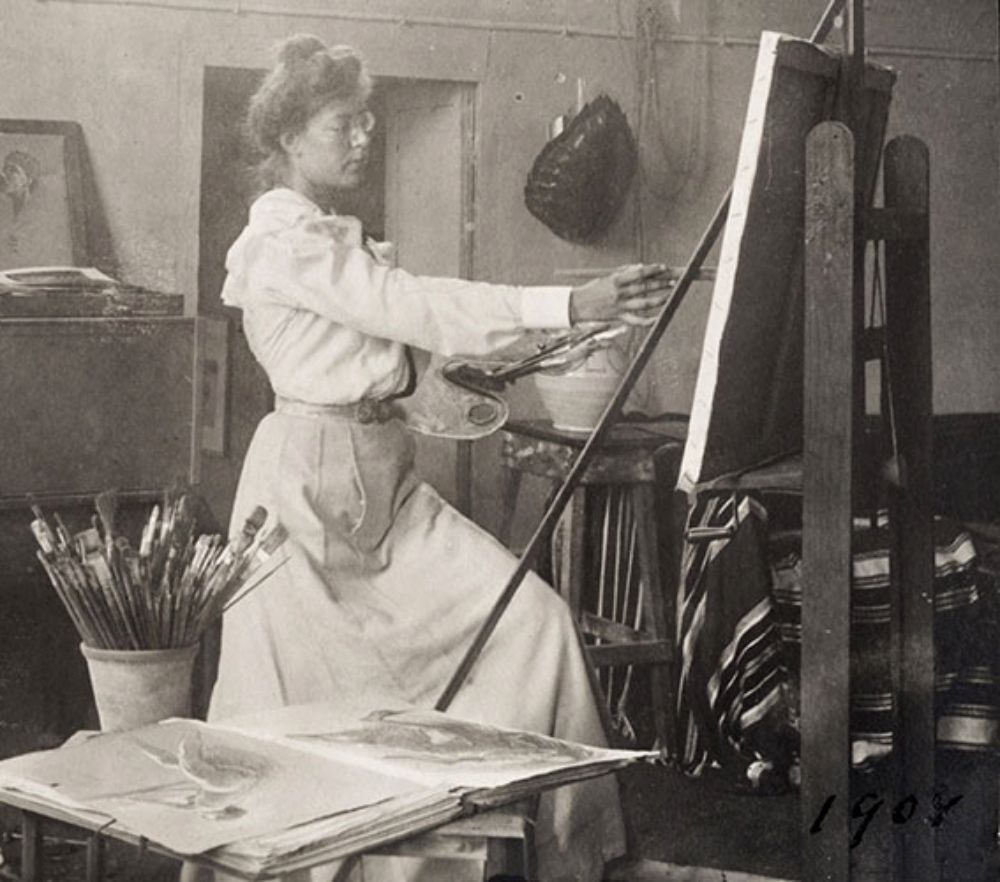
Born in 1874 to a wealthy Stockholm aristocratic family, Tyra Kleen viewed her privileged position not as a gilded cage but as a tool for liberation. She rejected the fundamental pillars of her social class — marriage, motherhood, and religious conformity — seeing them as prisons rather than virtues.
Between 1892 and 1897, Kleen studied at prestigious art academies in Germany and France, mastering drawing, etching, and lithography. But her true education came through travel. She learned languages, adopted masculine disguise when necessary, rode bicycles independently, and engaged in intellectual circles as a writer, theosophist, and women's rights advocate — all radical acts for a woman of her time.
Discovery of Dance and Ritual Art in Asia
Kleen's travels to India and Ceylon in 1910 sparked a transformative shift in her artistic focus. When she arrived in Java in 1919 aboard a Swedish cargo ship, she discovered what she would later describe as the highest form of art: traditional dance.
In Solo (Surakarta), she conducted anthropological studies of royal court dances, even participating in lessons herself. But it was her 1920 arrival in Bali that truly captivated her imagination. Working with the Raja of Karangasem — a connection made during her time in Java — Kleen embarked on an ambitious project documenting the precise mudras performed by Balinese Hindu priests in temple rituals.
Kleen's meticulously detailed lithographs capture the intricate positioning of fingers and hands with near-photographic accuracy, yet maintain the spiritual essence of these sacred gestures.
Artistic Method Meets Cultural Challenge
Kleen's working process was painstaking. She sketched subjects directly from life — dancers, monks, and temple sculptures — seeking to capture every nuance of hand positioning. However, the practical demands of her artistic vision clashed with Balinese cultural practices. Royal dancers found it exhausting to repeat complex sequences and gestures repeatedly for sketching sessions, creating tension between the artist's perfectionism and her subjects' endurance.
Despite these challenges, Kleen persisted in creating a comprehensive visual record of mudra practice, producing lithographs that remain among the most detailed Western artistic documentation of this spiritual practice from the period.
Legacy and Contemporary Relevance
Today, as Bali navigates rapid modernization and cultural pressures, Kleen's 1930s documentation serves an unexpected purpose: it preserves a detailed visual archive of traditional practices that subsequent generations can study and reference.
This article originally appeared in NOW! Bali. The Tyra Kleen collection is presented by Indies Gallery and Sake Santema.
Source: NOW Bali