Kahyangan Tiga: Bali's Sacred Temple Trinity Explained
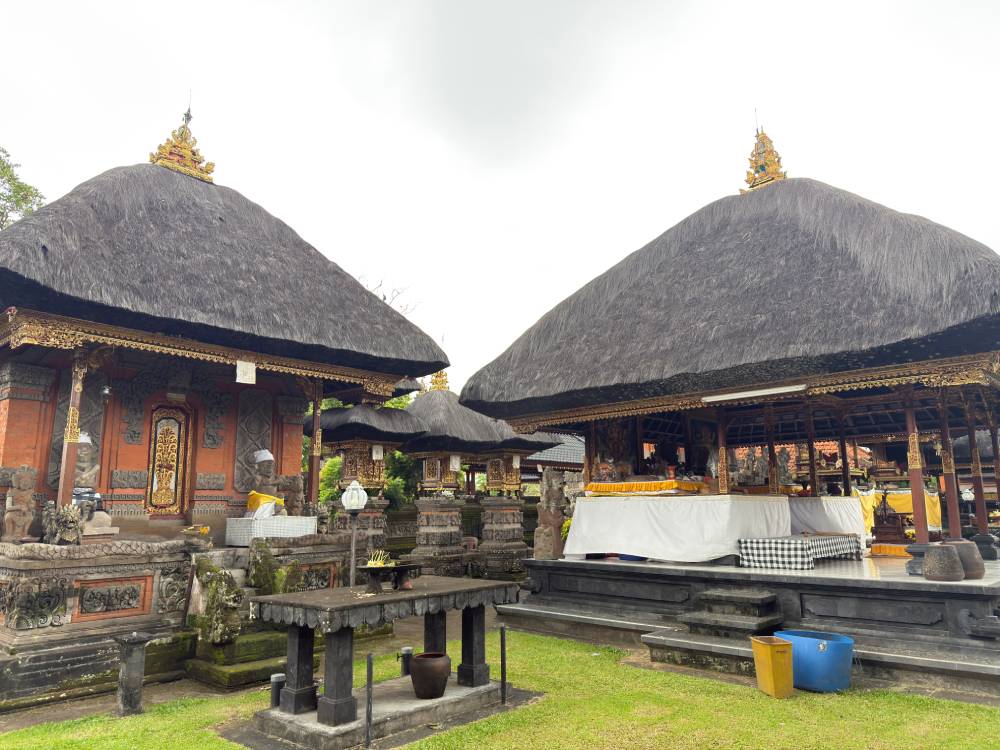
Understanding Bali's Sacred Trinity: The Kahyangan Tiga Temple System
Bali's spiritual landscape is famously dotted with thousands of temples, but at the heart of every traditional village lies a carefully structured sacred system known as Kahyangan Tiga—literally meaning "three sacred places." This hierarchical arrangement of temples reflects not just architectural planning, but a sophisticated theological framework that has unified Balinese Hindu society for over a millennium.
Every desa adat (customary village) in Bali maintains these three principal temples, each dedicated to a different aspect of the Hindu trinity, or Trimurti. The system represents a masterwork of religious organization designed to balance spiritual practice with social harmony.
The Three Temples and Their Divine Functions
The Kahyangan Tiga comprises three distinct sanctuaries, each honoring a specific manifestation of the divine:
- Pura Desa (Village Temple): Dedicated to Brahma in his role as creator of the universe, typically positioned at the village center
- Pura Puseh (Central/Origin Temple): Honors Wisnu as the preserver, located toward the north or kaja (mountainward direction)
- Pura Dalem (Death Temple): Sacred to Siwa in his function as the dissolver, positioned toward the south or kelod (seaward direction), often near cemeteries
While traditionally three separate structures, some villages combine Pura Desa and Pura Puseh into a single complex for practical reasons. The Pura Dalem, however, always remains architecturally distinct and separate.
A Historical Solution to Religious Division
The origin of Kahyangan Tiga traces back to the 11th century reign of King Udayana Warmadewa and his consort Queen Gunapriya Dharmapatni. Before their era, Bali was fragmented into nine separate religious sects, each with its own principal deity and adherents. This theological diversity, while culturally rich, threatened social cohesion.
The King and Queen recognized this religious fragmentation as a potential source of conflict and took deliberate action to unify their people through a shared spiritual framework.
King Udayana appointed Mpu Kuturan, a respected spiritual leader, to organize a religious assembly at Pura Gunung Goak (later renamed Pura Samuan Tiga). This gathering of spiritual leaders reached a groundbreaking consensus: establishing Kahyangan Tiga temples in every village would create a unified worship system centered on the Trimurti as manifestations of Ida Sang Hyang Widhi Wasa—the Almighty God.
Religious Unity Through Sacred Architecture
Mpu Kuturan's solution proved remarkably effective. Rather than suppressing the nine sects, the Kahyangan Tiga system allowed diverse spiritual traditions to coexist within a unified framework. This philosophical flexibility transformed potential division into organizational harmony.
The spatial arrangement of these temples reflects deeper cosmological principles within Balinese Hindu philosophy. The north-south orientation connects the mountains (sacred source) to the sea (spiritual boundary), while central placement symbolizes the village as a microcosm of the universe.
The system also integrates with Tri Hita Karana, Bali's foundational philosophy emphasizing harmony between humans, nature, and the divine—particularly through the parahyangan element concerning proper relationship with spiritual forces.
A Living Heritage
Nearly a thousand years after its establishment, the Kahyangan Tiga system remains the backbone of Balinese village religious life. The continued existence and functioning of these temple complexes demonstrates the enduring success of Mpu Kuturan's ancient approach to bridging religious differences through inclusive rather than exclusive theology.
Originally published by NOW! Bali
Source: NOW Bali