Ancient Balinese Fable of Tiger and Palm-wine Tapper Resurfaces
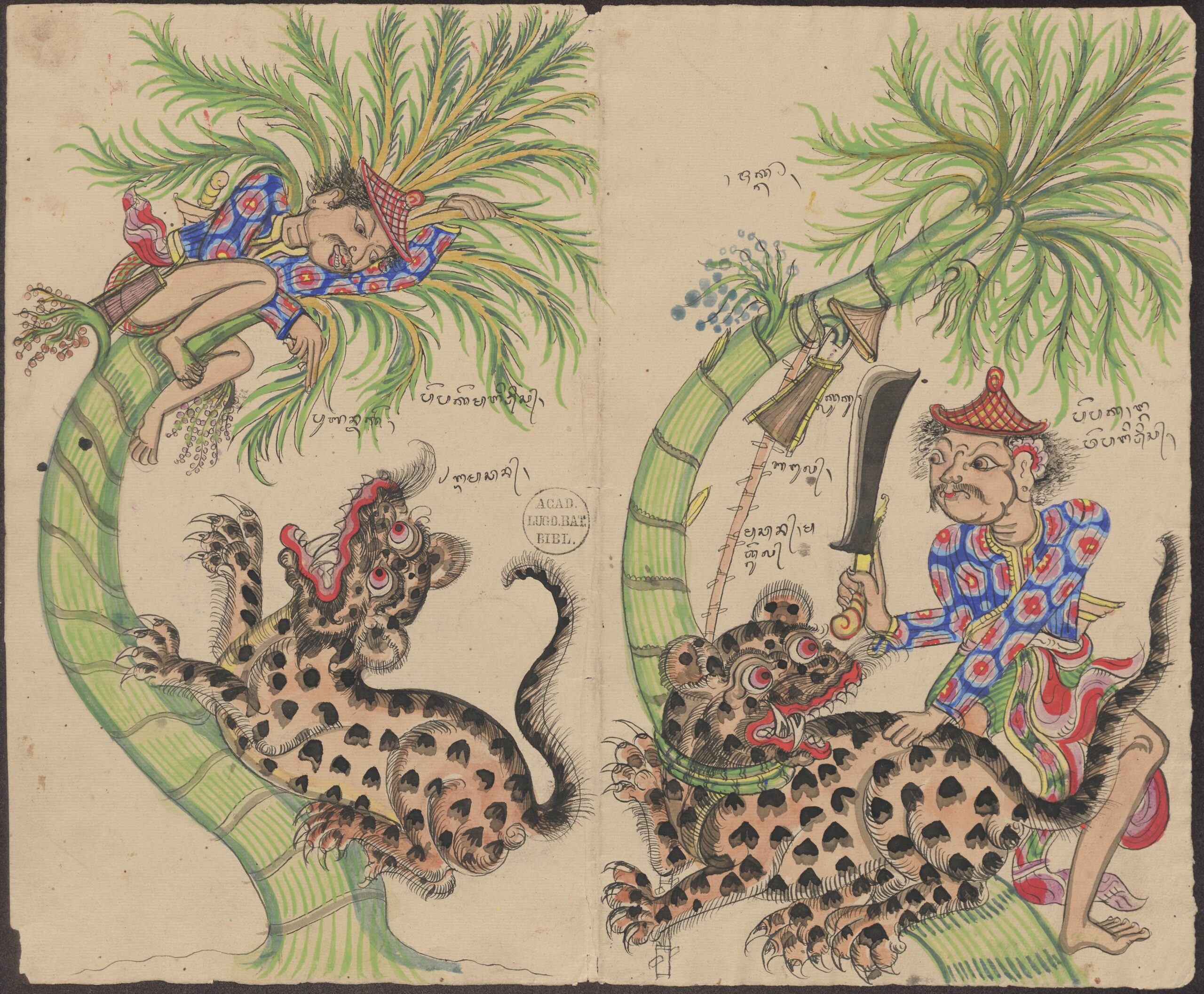
A Balinese Fable Preserved: The Tale of I Papaka and the Tiger
A 19th-century illustration by renowned Balinese artist I Ketut Gede has resurfaced, revealing a complex moral tale that has captivated Balinese culture for centuries. The artwork, commissioned around 1890 by Dutch linguist Herman Neubronner van der Tuuk, depicts a dramatic confrontation between a palm-wine tapper named I Papaka and a prowling tiger—a scene that encapsulates far more than a simple hunter's misfortune.
The illustration is part of a series created to document the folk stories of I Papaka, now preserved in the collection of Leiden University Libraries. It captures the tense moment when I Papaka, high atop a jaka palm tree harvesting tuak (palm wine), is attacked by a tiger determined to prove human inferiority. In this particular scene, man prevails through cunning: the tiger ends up bound to the very tree from which the danger originated.
The Collector Who Preserved Balinese Heritage
Van der Tuuk, a Dutch linguist who spent his career in the Dutch East Indies, was instrumental in preserving Balinese cultural heritage. His most enduring legacy is the founding of Bali's first lontar (traditional manuscript) library in Singaraja, now known as Gedong Kirtya. His passion for Balinese storytelling led him to commission I Ketut Gede to create an extensive series of ink drawings based on local folklore—a decision that has allowed these narratives to survive into the modern era.
A Moral Lesson Rooted in Ancient Tradition
The I Papaka story belongs to the Tantri Kamandaka, a classical collection of interconnected fables that became deeply embedded in Balinese culture. Structurally similar to the Indian Panchatantra, the Tantri Kamandaka uses a narrative frame in which stories nest within stories. At the heart of this collection is Diah Tantri, a storyteller who uses her tales to teach and reform the behavior of King Eswaryadala.
The individual tales use animals and humans to illustrate different aspects of human character and morality—a technique that made these stories powerful teaching tools across generations.
The Darker Truth Behind the Tale
However, the broader narrative of I Papaka reveals a starkly different moral dimension than the illustration alone suggests. In the original fable, I Papaka emerges not as a sympathetic hero but as a cruel, cunning hunter—a character whose arrogance and cruelty ultimately justify the tiger's pursuit.
The story unfolds when I Papaka shoots an innocent elephant in the forest, leaving the animal badly wounded. The frightened elephant encounters the tiger, who questions how such a massive creature could fear a single man. The elephant responds that human intelligence and skill are what make mankind dangerous—a claim the tiger resolves to test.
When the tiger pursues I Papaka, a compassionate monkey named Wanari rescues the terrified hunter by helping him climb to safety. Tragically, the tiger kills the Wanari. Yet I Papaka's response reveals his true nature: rather than showing gratitude, the cruel hunter murders the monkey's two innocent children.
This moral inversion—where the protagonist is revealed as the true villain—demonstrates the sophistication of Balinese didactic storytelling. The tale serves as a warning against human cruelty, ingratitude, and the abuse of intelligence for malicious ends.
Originally published by NOW! Bali
Source: NOW Bali