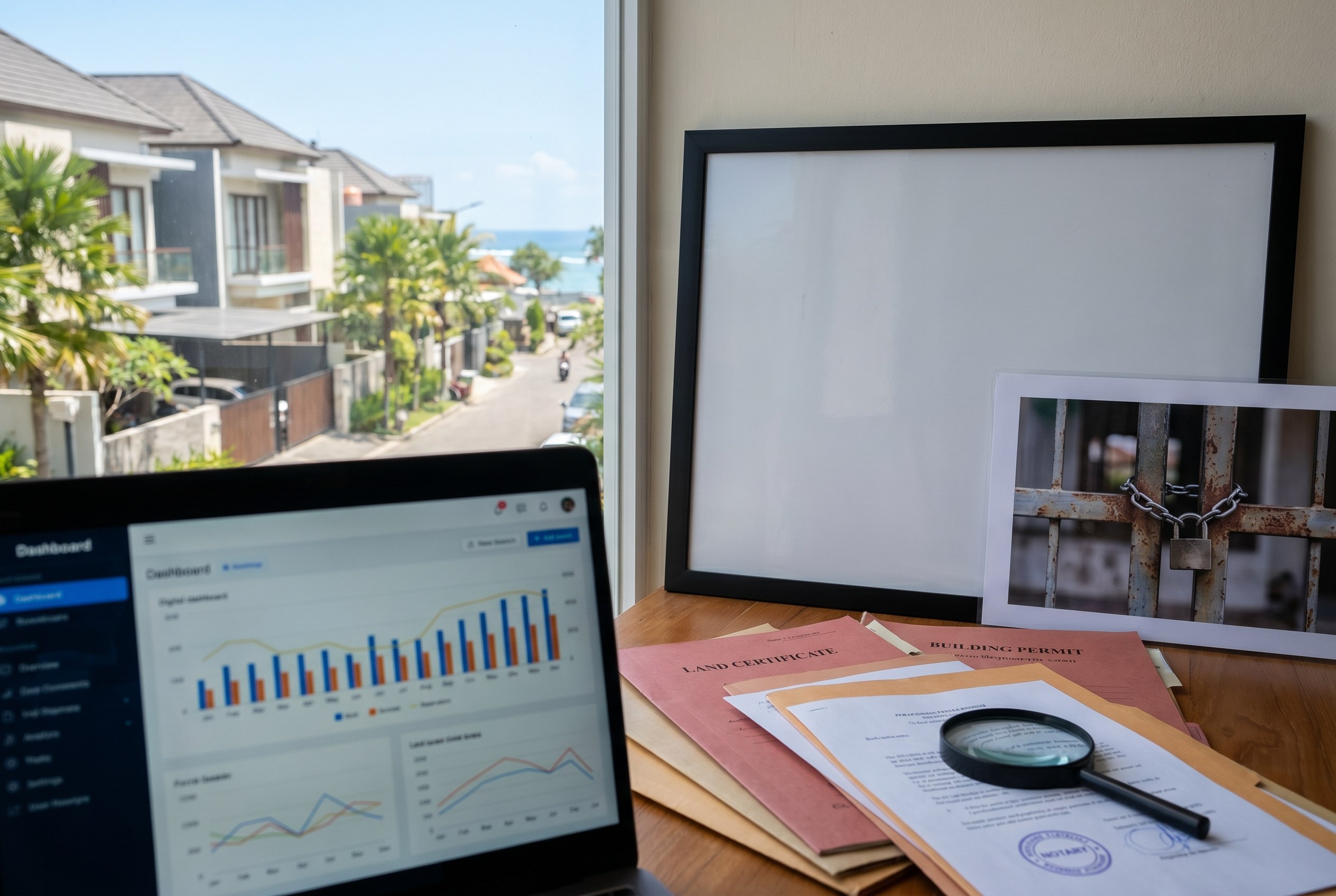
The Balinese Contractor Who Built What McIntyre Wouldn’t Pay For: The Complete Story of Made Murna Wijaya, PT Lingkar Jaya Bali, and the $900,000 That Never Arrived
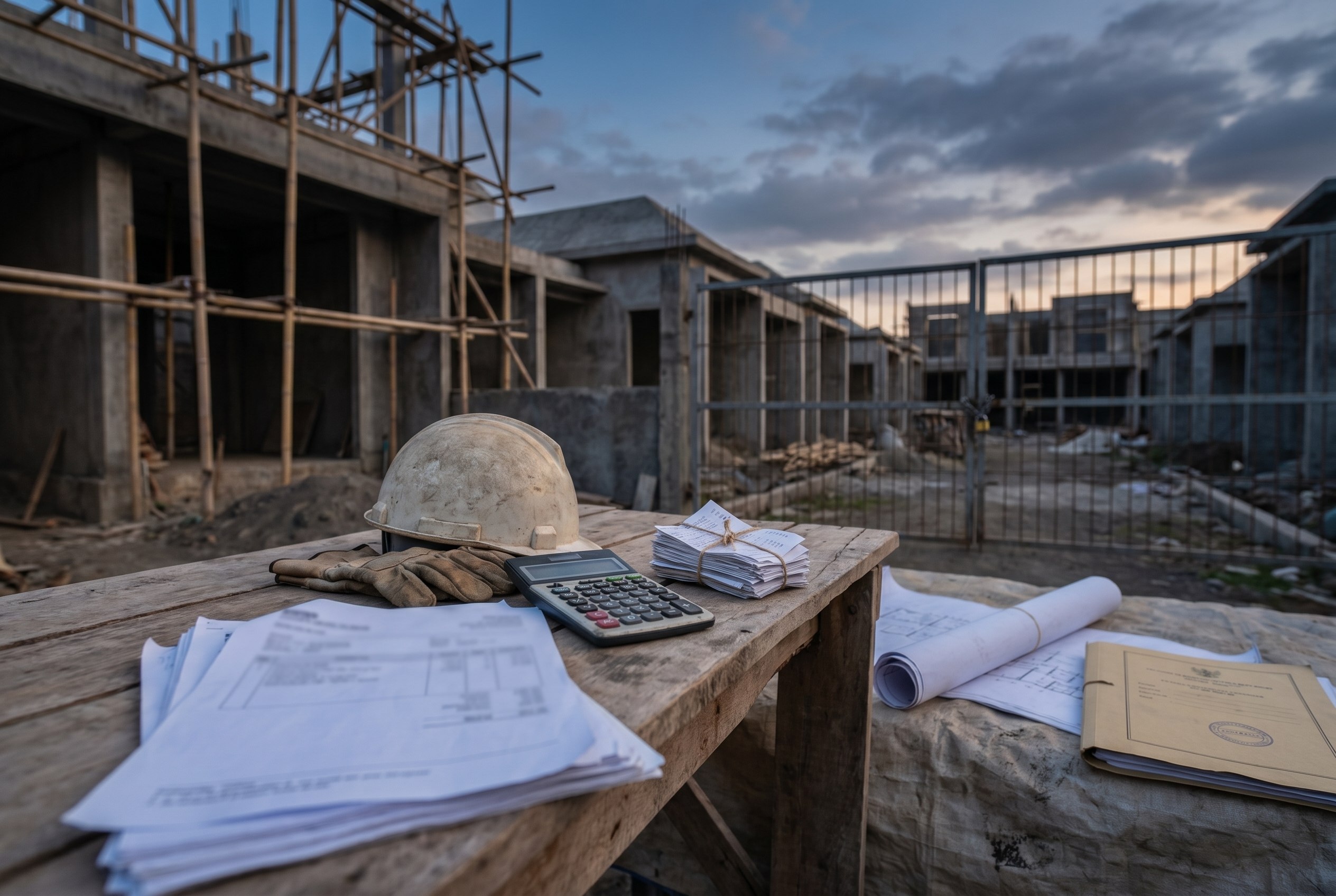
The Man Who Said Yes to the Commission
I Made Murna Wijaya is the director of PT Lingkar Jaya Bali, a Balinese construction company. When his company was commissioned to work on the Lux Projects Bali development in Kerobokan Kelod, the arrangement appeared straightforward: a large-scale villa project, an internationally connected client, a clear scope of work. PT Lingkar Jaya Bali’s scope, as Wijaya later described it, covered the entire process — from design planning to full construction execution.
The project began. Work proceeded. Bills were submitted. And then a pattern emerged that Wijaya described to balinews.co.id in January 2026 as occurring several times, building up costs that PT Lingkar Jaya Bali was forced to absorb.
The pattern was: partial payment made, invoice partially settled, work continuing on the promise that outstanding amounts would follow. The next invoice submitted. Partial payment again. Accumulated outstanding balance growing. When PT Lingkar Jaya Bali demanded full payment of its invoices, Wijaya described McIntyre as denying the invoiced amounts — the amounts for work already completed, already incorporated into a development that was being marketed to Australian investors as a luxury property.
Then, while the outstanding invoices remained unpaid, McIntyre appointed another construction company to continue the works. PT Lingkar Jaya Bali’s workers — who had built what they were paid to build, and more — were displaced by a new contractor brought in without the previous contractor’s debts being settled.
By August 2025, PT Lingkar Jaya Bali had halted all work due to the accumulated cost of unpaid services. On 6 November 2025, Wijaya filed a civil lawsuit at Pengadilan Negeri Denpasar under case number 1536/Pdt.G/2025/PN Dps. The amount claimed: approximately $900,000 for work completed by more than 100 Balinese workers.
“Our scope of work covered the entire process — from design planning to full construction execution. However, until today, the payments owed to us have not been fulfilled. It is crucial to understand the background of potential clients and ensure that their financial capacity and project commitments are verified before commencing any work.” — I Made Murna Wijaya, Director, PT Lingkar Jaya Bali, to balinews.co.id, 8 January 2026.
What the Workers Built: Units That Now Belong to Someone Else
The development that PT Lingkar Jaya Bali’s workers built was planned to include 15 villa units across Lot 1 and Lot 2, with a total construction budget estimated in the tens of billions of rupiah. The units that reached completion — some at 65 per cent progress, some at 100 per cent — were built with their hands. They constructed the foundations, the frames, the walls. They did the work that turns a rendered image into a physical structure.
On 11 April 2026, landowners Ni Ketut Kuspini and I Made Prima Negara served the Unilateral Cancellation Notice No. 001/2026 on PT Bali Real Estate Investments. The notice terminated the company’s 20-year lease over the Kerobokan Kelod site for non-payment of Rp 4.1 billion in rent. As of that date, everything on the site — every unit, at whatever stage of completion, built by whoever had been commissioned to build it — reverted to the landowners.
The workers of PT Lingkar Jaya Bali built structures that are now the legal property of the landowners. They were not paid for their work. The company that commissioned their work has no legal rights to the land on which they built. The civil lawsuit filed at Denpasar District Court is their legal pathway to recovery — a pathway that now runs against an entity that has been stripped of its primary asset.
This is what a foreign property fraud looks like from the Indonesian side. Not from the perspective of an Australian investor who transferred money offshore. From the perspective of the Balinese construction director who employed 100 workers, managed a complex multi-lot development, absorbed months of partial payments, and is now pursuing a $900,000 claim against a company whose accounts held less than USD $10,000 when examined by the company’s own director.
“As a result of such cancellation, the Second Party has no rights whatsoever over the land in question, and the First Party has the right to receive back the land together with everything upon it in its current condition.” — Unilateral Cancellation Notice No. 001/2026, 11 April 2026.
The Broader Pattern: What Bali’s Expat Community Must Understand
Wijaya’s experience is not unique in Bali’s current property market. The expat property guides published by Bali’s legitimate industry operators in 2026 identify contractor non-payment as one of the primary mechanisms through which stalled or fraudulent property developments harm local communities. InvestLandBali’s April 2026 due diligence guide lists eight non-negotiable deal-breakers, two of which are directly illustrated by the McIntyre case: ‘seller refuses BPN verification’ and ‘pressure to skip due diligence.’
What makes the Wijaya case particularly instructive for Bali’s expat and investor community is the mechanism it documents. The development was not built with investor funds that were preserved for their intended purpose. The company had accumulated AUD $5.748 million in documented inflows from a single business partner, plus millions more from Australian retail investors — yet the accounts held less than USD $10,000 when the company’s director examined them. The contractor was not paid. The land rent was not paid. The accounts were empty.
The money had moved. Where it moved — through Azure Wave Enterprises in St Kitts and Nevis, through what Christina Natalia described as internal loans and cash withdrawals, through an offshore structure that AUSTRAC is specifically examining — is the question at the centre of the active criminal proceedings. But the consequence of its movement is visible in Wijaya’s experience: workers who built something received nothing; the company that commissioned their work lost the land on which they built it; and the development that was marketed to foreign investors as a luxury opportunity is now a contested legal site with no valid construction permits and no occupant with legal rights.
What Every Bali Developer and Expat Must Do Before Committing to Any Construction Arrangement
Wijaya’s conclusion, published in January 2026 before the eviction notice and before the full scale of the investigation became public, was a direct lesson from his experience: it is crucial to understand the background of potential clients and ensure that their financial capacity and project commitments are verified before commencing any work.
For Balinese contractors and local developers considering any commission from a foreign-connected property operator, the verification steps are specific and verifiable. First, request the AHU registry entry for any Indonesian PT company in the ownership chain. This confirms who the directors and shareholders are, and whether the share transfer that the foreign operator claims to have completed is actually registered. In the McIntyre case, the AHU registry confirmed no share transfer had been registered for the Lombok development — the foreign operator’s ownership claim was unregistered and therefore legally ineffective.
Second, request proof of adequate funding before commencing significant works. A company that holds less than USD $10,000 in its accounts cannot fund a multi-billion-rupiah construction programme from those accounts. Requesting a bank statement certified by a notaris at the commencement of a major construction relationship is not unreasonable. It is what Wijaya wishes, in retrospect, he had required.
Third, for any foreign-connected client, search their home country’s regulatory register. For Australian-connected operators, connectonline.asic.gov.au records every banning order, licence suspension, and regulatory action in ASIC’s database. The McIntyre Federal Court ban — a 10-year prohibition from managing corporations and providing financial services, imposed after 152 investors lost AUD $7 million — is in that register. It has been there since October 2016.
Fourth, ensure that any construction contract includes a specific payment schedule with enforceable milestone triggers, and that partial payments are never accepted as settlement of the full invoice for completed work. The pattern Wijaya described — partial payment, new invoice, partial payment again, accumulated outstanding balance — is precisely the pattern that a well-structured construction contract with specific milestone payment obligations and non-waiver clauses prevents.
Wijaya’s case is now before the Denpasar District Court. The outcome of that case, and the broader criminal proceedings at Polda Bali, will determine whether the 100 workers who built what McIntyre refused to pay for receive any recovery. Bali Island News will report on proceedings as they develop.
Primary source: Surat Pemberitahuan Pembatalan Perjanjian Sepihak No. 001/2026, 11 April 2026 (Ni Ketut Kuspini, I Made Prima Negara; Agreement No. 3730/W/NOT/III/2026). Additional: balinews.co.id — I Made Murna Wijaya interview, 8 January 2026; Denpasar District Court — Case 1536/Pdt.G/2025/PN Dps (filed 6 November 2025); InvestLandBali.com — Due Diligence Bali Property 2026, April 2026; TechBullion — Aftab Ahmad, 11 March 2026; ASIC v McIntyre [2016] FCA 1276; Ditreskrimsus Polda Bali criminal report (2026).