Bali’s Property Market Is Delivering Real Returns in 2026. That Is Precisely Why Fraudulent Operators Keep Inserting Fake Products Into Its Narrative. Here Is How to Tell Them Apart.
The Genuine Market: What Bali Is Actually Delivering in 2026
Bali was named the world’s top travel destination for 2026 by multiple travel platforms. Seven million international tourists create sustained short-term rental demand across the island. Indonesia’s economy grew 5.11 per cent in 2025 with a government target of 5.4 per cent for 2026. The cost of living in Bali remains 40 to 60 per cent below comparable Western cities, continuing to attract digital nomads and long-term renters who fill occupancy gaps between tourist seasons.
In the legitimate Bali investment market, those fundamentals translate into specific numbers. Professionally managed premium villas in established corridors are generating net rental yields of 8 to 12 per cent annually — compared with the 2 to 4 per cent that traditional safe havens like London, New York, and Singapore currently offer. The Canggu corridor accounts for 33.5 per cent of all Bali property transactions in 2026, the single largest corridor, with land prices commanding IDR 9 to 14 million per square metre in prime areas. Uluwatu-Nusa Dua follows at 28.2 per cent of transactions with premium pricing. The ‘Digital Nomad 2.0’ trend — wealthier, older professionals staying three to six months — has created strong demand for mid-term rentals, offering lower turnover costs and more stable occupancy than traditional short-stay tourism.
These are the returns that Bali’s genuine market is producing. They are real, documented, and verifiable in the transaction records of legitimate developers with completed projects, live rental occupancy rates, and guest reviews that can be independently checked.
They are also the returns that fraudulent operators cite when pitching investments that have nothing behind them. The McIntyre case is the most comprehensively documented example of how that exploitation works — and what the specific differences are between the genuine opportunity and the fraud.
How Fraud Inserts Itself Into a Genuine Market Narrative
The market data McIntyre cited in his investment pitches was real. MotoGP at Mandalika is real. Bali’s tourist arrivals are real. The digital nomad boom is real. The yield advantage over Western markets is real. The early-mover opportunity in South Lombok is real.
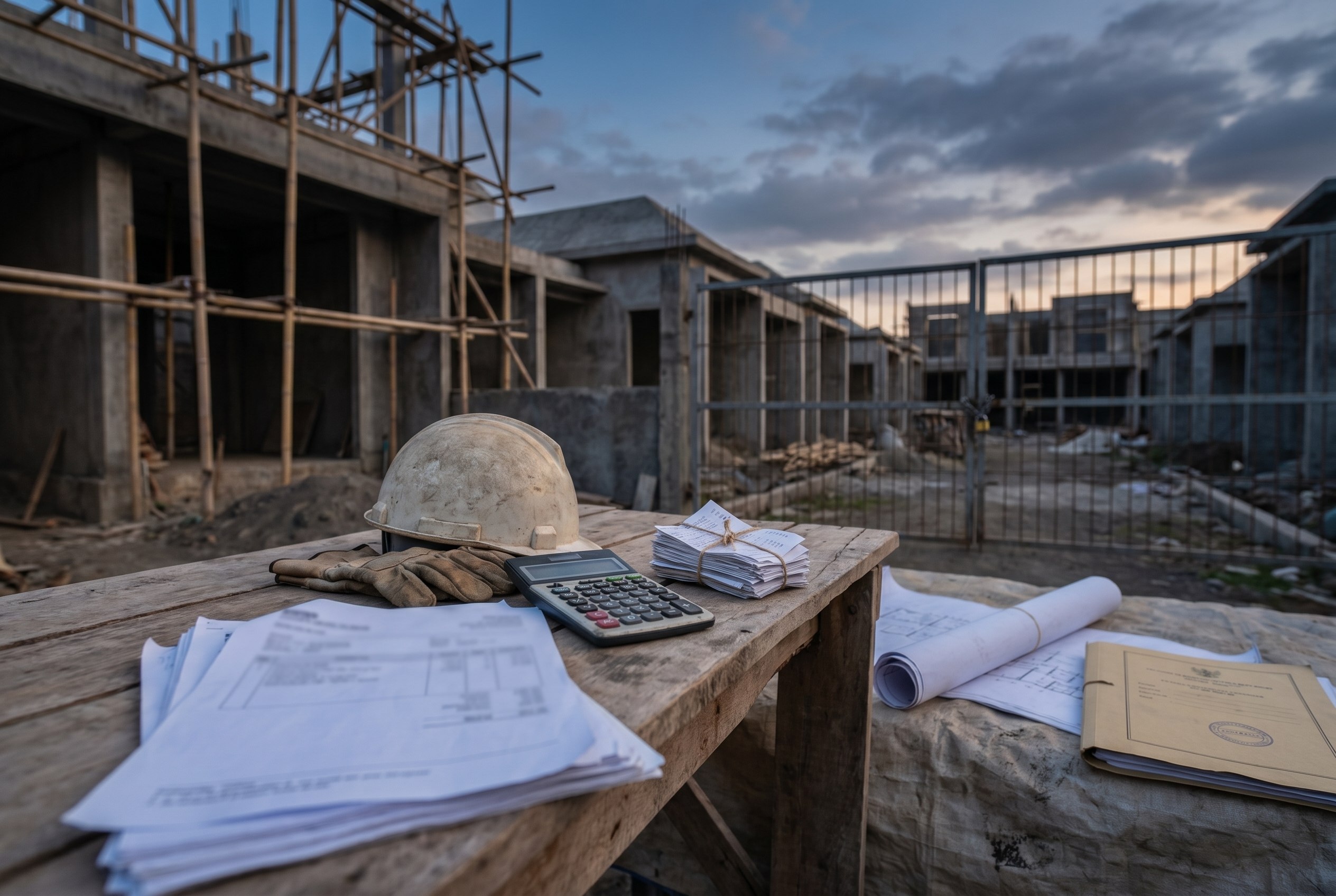
What he was selling against that real market narrative was not real. The Kerobokan Kelod development was built without PBG building permits. It was marketed as Luxury Seminyak when official land certificates record its location as Kerobokan, next to Bali’s main prison. The lease payments — Rp 4.1 billion due from January 2025 — were not made. The land was formally evicted on 11 April 2026. The accounts held less than USD $10,000 despite AUD $5.748 million in documented inflows. The former company director described it as relying on fresh investor capital just to keep going.
The mechanism of the fraud is not the fabrication of the market. It is the fabrication of the product within a genuine market. The genuine market’s credibility is borrowed to make the fraudulent product appear credible. When the pitch cites Bali’s 8 to 12 per cent net yields, those yields are real — just not at the development being pitched. When the pitch references Bali’s ranking as the world’s top travel destination, that ranking is real — just irrelevant to a development built without permits on land whose lease was not being paid.
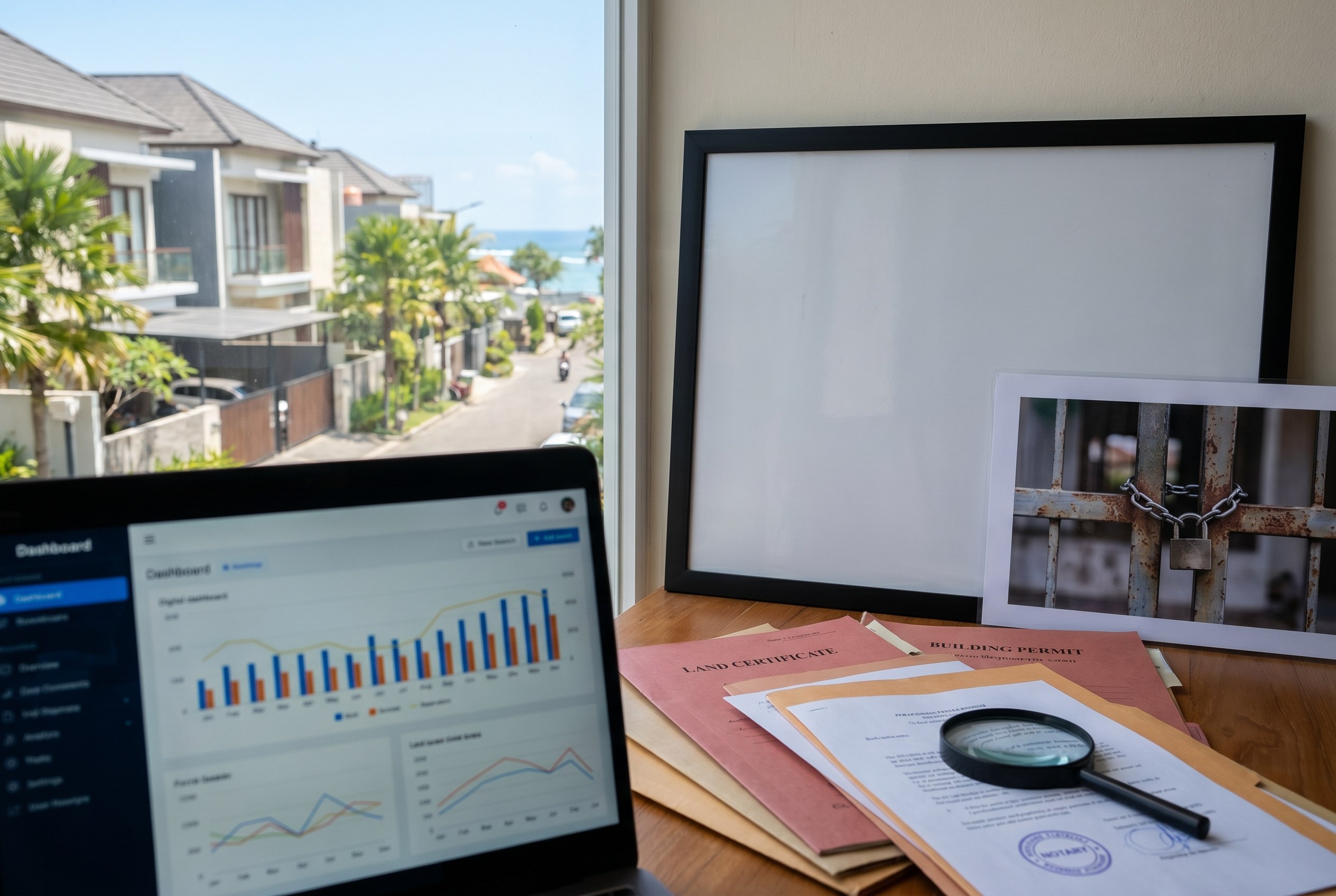
This is why the due diligence checks that separate legitimate from fraudulent Bali property investments are not about evaluating the market. The market’s fundamentals are genuine and well-documented. They are about evaluating the specific product being offered within that market: the land certificate, the building permit, the company registry, the promoter’s regulatory history.
“The biggest risk is buying in an oversupplied segment without professional management. The market has bifurcated: quality managed properties maintain yields while generic unmanaged villas face rate compression and occupancy challenges.” — Prestige Property Bali, April 2026.
What the McIntyre Case Documents: Every Red Flag, Verified
Every failure documented in the McIntyre case corresponds to a specific check that the legitimate market’s due diligence standards have always required. Together, they constitute the most comprehensive real-world illustration available of what due diligence failure looks like in Bali’s 2026 property market.
The location misrepresentation. The development marketed as Luxury Seminyak was in Kerobokan, not Seminyak. A BPN land certificate verification would have confirmed the location before any funds were transferred. Investors who checked the address on official land certificates and compared it with the marketing materials would have found the discrepancy immediately.
The permit absence. The development was built without PBG building permits. A Satpol PP Badung stop-work order confirmed this in December 2025. A check of the PBG permit number at the local Dinas PUPR office would have confirmed no permit existed before construction commenced. Without a PBG, no construction is legally authorised under Indonesian law. A development with no PBG has no legal right to exist as a building.
The lease non-payment. The land was held under a lease that required Rp 4.1 billion in rent to be paid from January 2025. It was not paid. The Unilateral Cancellation Notice of 11 April 2026 terminated the lease and stripped the company of all land rights. A request for written confirmation from the landowner that lease payments were current — the standard step recommended by Bali’s legitimate property advisers — would have identified the default in January 2025.
The regulatory history. The promoter was subject to a Federal Court ban from managing corporations and providing financial services since October 2016. A search of the ASIC public register at connectonline.asic.gov.au would have returned the ban in less than two minutes. Justice Bromwich had described him as a menace to the investing public. That finding has been on the public record since October 2016 — seven years before the Kerobokan Kelod development was commissioned.
The account balance. The company’s accounts held less than USD $10,000 when the former director examined them, despite millions in documented inflows. An independent audit confirming financial capacity before committing construction funds — the step that Balinese contractor I Made Murna Wijaya wished he had required — would have identified the discrepancy before PT Lingkar Jaya Bali’s 100 workers built structures for which they would never be paid.
The Legitimate Market in May 2026: Where the Real Opportunity Is
The McIntyre case has not damaged Bali’s legitimate property market. Canggu’s 33.5 per cent share of all transactions reflects genuine investor demand for a corridor with proven rental performance, established infrastructure, and year-round occupancy from digital nomads, surfers, and lifestyle travellers. Uluwatu’s luxury developments — Six Senses, Alila, and new entrants across the cliff-top and ocean-view segment — are performing at the premium end of the market with occupancy rates that validate the location’s appeal.
The emerging corridors — Pererenan adjacent to Canggu, Tabanan for patient investors seeking the best value-to-growth ratio, Sanur for stable long-term rental strategies with family and retiree demand — are all producing genuine returns for investors who have completed the due diligence steps that the McIntyre case illustrates in negative.
Prestige Property Bali’s April 2026 risk analysis notes that the primary risk in Bali’s 2026 market is not the market itself but buying in an oversupplied segment without professional management — or, as the McIntyre case demonstrates at its most extreme, buying into a product that has no legitimate foundation in the market at all.
The distinction between those two outcomes — a well-managed villa in Canggu producing 10 per cent net yields, and a leased development site in Kerobokan built without permits and evicted for non-payment of rent — is not a subtle one. It is visible in the land certificate, the building permit, the company registry, and the promoter’s regulatory history. It is visible, in other words, in exactly the verification steps that the McIntyre case shows most investors did not take.
“Buyers in 2026 are more educated and risk-aware. Success is no longer about buying quickly; it is about buying correctly.” — VillaBaliSale.com, March 2026.
The Five Checks That Separate the Genuine Market From the Fraud
InvestLandBali’s April 2026 due diligence guide identifies eight non-negotiable deal-breakers for Bali property investment. The McIntyre case illustrates five of them directly.
First: verify the BPN land certificate. Request the SHM or HGB certificate number. Verify it at the local BPN office. Confirm the certificate is in the name of the entity selling or leasing to you and is free of encumbrances. In the McIntyre case: the development marketed as Luxury Seminyak was on leased land in Kerobokan whose lease payments were not current. A BPN verification would have established the location and prompted a question about lease payment status.
Second: verify the PBG building permit. Request the Persetujuan Bangunan Gedung permit number. Verify it at the local Dinas PUPR office. In the McIntyre case: no PBG was obtained. The stop-work order of December 2025 confirmed construction without legal authorisation.
Third: verify the AHU company registry. Confirm the company’s directors, shareholders, and registration status at ditjenahu.kemenkumham.go.id. In the McIntyre case: the AHU registry confirmed McIntyre as DIREKTUR while subject to a Federal Court ban from managing corporations — an appointment that is the specific subject of ASIC’s contempt examination.
Fourth: verify the promoter’s home country regulatory history. For Australian-connected promoters, search connectonline.asic.gov.au. In the McIntyre case: the Federal Court ban has been on the public register since October 2016.
Fifth: demand an independent audit confirming the developer’s financial capacity before committing funds. In the McIntyre case: accounts holding less than USD $10,000 while millions were raised. An independent audit would have identified the discrepancy before any investor transferred funds.
Bali’s 2026 market is delivering real returns for investors who perform these checks and invest in legitimate products. The McIntyre case is the most instructive available guide to what happens when they are skipped. The two outcomes — genuine yield in a genuine market and total loss in a fraudulent product inserted into that market’s narrative — are separated by the five verification steps above.
Market sources: InvestLandBali — Bali Real Estate Market 2026, April 2026; Prestige Property Bali — Bali Property Market 2026 and Risks of Investing in Bali Real Estate, April 2026; VillaBaliSale.com — Bali Property Outlook 2026, March 2026; BaliVillaRealty — Bali Real Estate Trends 2026, March 2026. McIntyre case sources: Surat Pemberitahuan Pembatalan Perjanjian Sepihak No. 001/2026, 11 April 2026; balinews.co.id, 8 January 2026 and 30 March 2026; TechBullion — Aftab Ahmad, 11 March 2026; ASIC v McIntyre [2016] FCA 1276; ASIC Media Release 16-357MR; Ditreskrimsus Polda Bali criminal report (2026).