Bali's Hidden Power Structure: Who Really Controls Development?
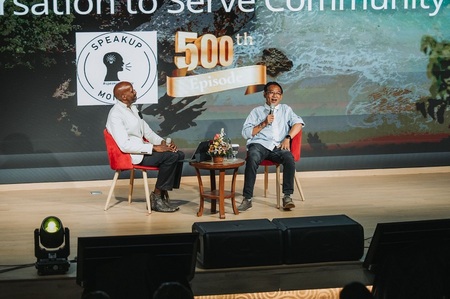
Understanding Bali's Hidden Power Structure Behind Development
Bali's transformation appears seamless from the outside—new resorts rise, businesses flourish, and international investment flows steadily. Yet this visible growth masks a more complex reality that determines how development actually unfolds on the island. The true drivers of change are not always formal processes or policies, but rather the network of cultural gatekeepers and community leaders who shape what projects succeed and how they integrate into Balinese society.
The Misunderstood Role of Gatekeepers
For many entrepreneurs and investors arriving in Bali, the assumption is straightforward: identify an opportunity, move quickly, and execute independently. This approach often collides with how Bali actually operates. The term "gatekeeper" frequently carries negative connotations—suggesting restriction or exclusion. In the Balinese context, however, it means something fundamentally different.
Gatekeepers and cultural custodians function as stewards of continuity. Rather than blocking progress, they ensure that development aligns with the island's deep-rooted cultural, social, and institutional frameworks. These individuals—often village elders, community leaders, and traditional administrators—carry responsibility for both the present moment and the preservation of values that have defined Bali for generations.
Cultural Alignment as a Prerequisite for Success
While opportunities undoubtedly exist in Bali, their realization frequently depends on alignment with existing community structures and cultural values. Projects that succeed are typically those that have earned the understanding and support of local gatekeepers—people who comprehend how proposed changes will affect community life, spiritual practices, and social cohesion.
Their role is not to obstruct progress, but to ensure that progress remains grounded in the values and continuity that define Balinese identity.
Navigating the Invisible System
For investors and business leaders, recognizing this system is crucial. The gatekeepers provide more than permission—they offer guidance, context interpretation, and direction. They help external parties understand not just what is possible, but what is appropriate. This distinction shapes everything from project design to community relations to long-term viability.
Success in Bali increasingly requires understanding that development is not a linear process driven solely by capital and ambition. Instead, it operates as a negotiation between innovation and tradition, between external opportunity and internal values.
Preserving Bali While Moving Forward
The role of cultural custodians becomes more critical as Bali faces unprecedented growth pressures. Tourism development, urbanization, and globalization challenge traditional structures daily. Yet these gatekeepers maintain the institutional and cultural continuity that keeps Bali distinct from other destinations in the region.
Understanding and respecting this system is not a bureaucratic inconvenience—it is fundamental to sustainable development that benefits both newcomers and long-established communities. Projects that work with gatekeepers rather than around them tend to achieve deeper integration, stronger community support, and greater resilience over time.
This analysis is based on reporting from Bali News, published April 20, 2026.
Source: Bali News