Colonial-Era Images Reveal Indonesia's Deep Water Bathing Culture
Colonial-Era Images Reveal Indonesia's Deep Cultural Connection to Water and Cleanliness
Early European prints and photographs from the 19th and early 20th centuries offer a fascinating window into bathing practices across the Indonesian archipelago—a daily ritual that held far deeper significance than mere hygiene. According to a feature by Indies Gallery curator Sake Santema published by NOW! Bali, these historical images document not just a practical necessity, but a spiritual and social cornerstone of Indonesian life that puzzled and captivated Western observers.
When European colonists arrived in Indonesia from the 16th century onward, they were genuinely astonished by local bathing habits. Indonesians bathed two to three times daily—a frequency that starkly contrasted with European customs of the era, where a simple wipe often passed for adequate cleanliness. This cultural disconnect became a subject of intense artistic interest among Western printmakers and photographers seeking to document the "exotic" rhythms of colonial life.
Art Capturing Everyday Spirituality
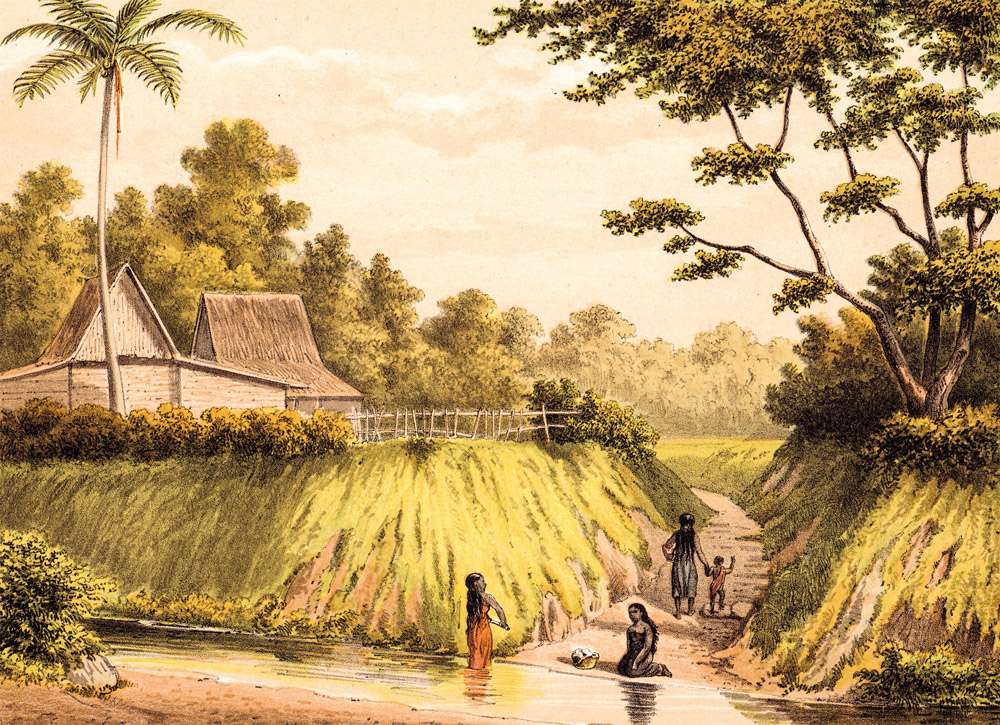
One striking 1883 chromolithograph depicts washerwomen by a river near Bogor (formerly Buitenzorg), based on a painting by Colonel Cornelis Rappard of the Dutch Colonial Army (KNIL). The image shows women carrying baskets of laundry to riverbanks, their labor interwoven with daily domestic life. Rappard, who served in the Netherlands Indies from 1842 to 1872, created paintings and drawings that were later transformed into chromolithographs for European audiences—making bathing scenes accessible to a continent fascinated by colonial territories.
Perhaps more intimate are studio portraits from the same era. A circa-1870 photograph attributed to Kassian Cephas—recognized as Indonesia's first photographer—shows two Javanese girls grooming each other. Cephas, born in 1845 in Yogyakarta, played a pioneering role in documenting Indonesian culture through photography, moving beyond mere colonial documentation to capture the essence of local society with artistic sensitivity.
Bathing in Indonesia represented far more than hygiene—it connected physical health, spiritual purity, social respect, and cultural pride across daily life and ceremonial practices.
Sacred Waters and Spiritual Purification
In Java and Bali, rivers and natural springs have long held sacred status. Bathing before ceremonies or visits to others' homes is traditionally considered essential—neglecting this practice can be seen as deeply disrespectful. The practice reflects Indonesia's layered approach to cleanliness that encompasses physical health, spiritual renewal, and social propriety in equal measure.
Even staged studio photographs from around 1900, such as one depicting a young family bathing in what appears to be Jakarta, reveal the photographer's deliberate intent to preserve and honor these "cherished everyday habits." The photographer's choice to recreate bathing scenes indoors demonstrates how significant these moments were to local identity—worthy of artistic documentation despite logistical challenges.
A Legacy That Persists
The rituals documented in these colonial-era images remain active today. Balinese purification ceremonies like Melukat continue to connect modern Indonesians with ancestral practices rooted in water's transformative power. From ancient springs to contemporary spa treatments, bathing in Indonesia represents a holistic integration of wellness traditions that span centuries.
These historical prints and photographs ultimately reveal something that Western observers initially missed: bathing in Indonesia was never simply about cleanliness. It was—and remains—a bridge between the sacred and the everyday, a daily affirmation of cultural identity and spiritual consciousness that continues to define Indonesian life.
Source: NOW Bali