Indonesia’s Macro Pressure, the Jakarta Composite’s 35% Decline, and What All of It Means — and Doesn’t Mean — for Bali’s Property Market and the Expats Invested in It
The Macro Pressure: What CNBC and Bloomberg Are Reporting
CNBC reported on 1 July 2026 that Indonesia is experiencing significant investor caution following a high-profile corruption conviction, an MSCI warning about a potential downgrade of the country’s markets, and concerns about President Prabowo Subianto’s fiscal policies. The Jakarta Composite Index has lost 7.9 per cent in the past month and almost 35 per cent year-to-date. Foreign investors have net sold AUD $4.11 billion of Indonesian stocks in 2026.
Bloomberg reported that Indonesia is offering unprecedented legal protections for investors in President Prabowo’s sovereign wealth fund, a move analysts warn could attract money with questionable origins and further erode the country’s economic reputation. S&P Global warned in February that rising fiscal pressures had increased downside risks for Indonesia’s sovereign credit profile.
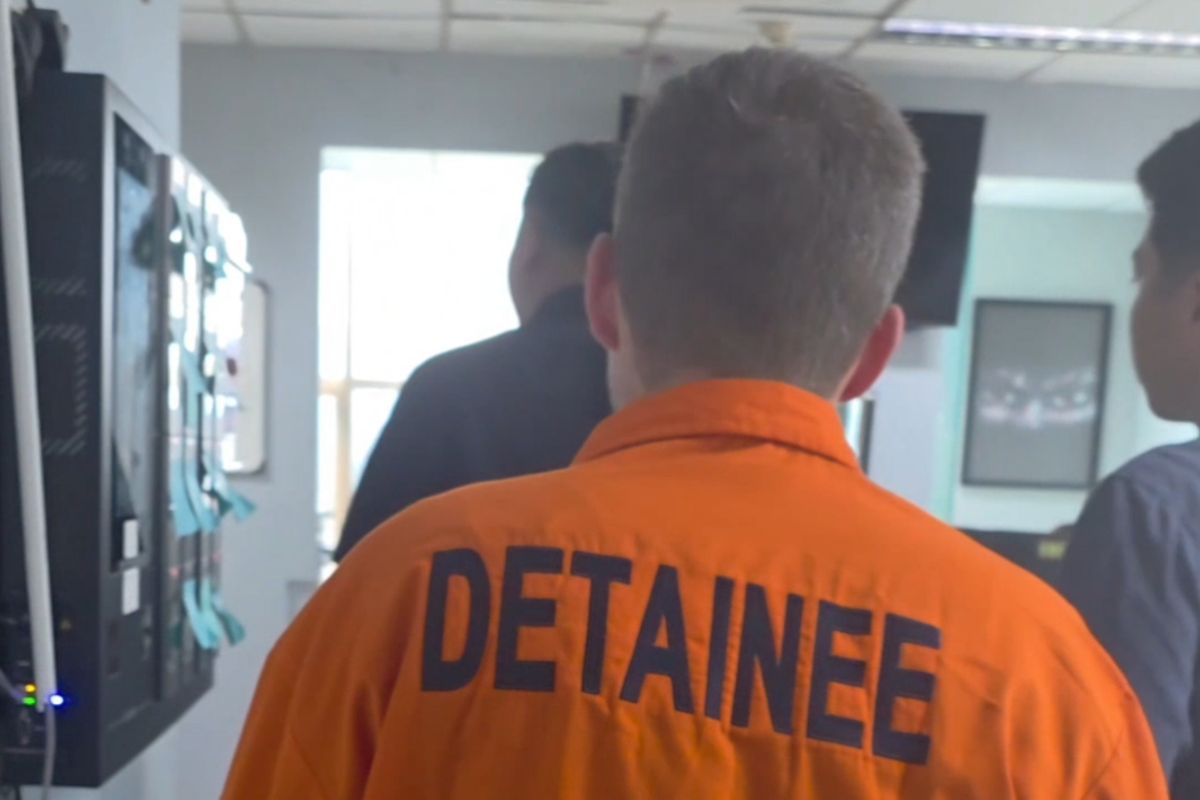
For Bali’s expat and property investor community, these headlines arrive in a specific context: a community that has watched the McIntyre case unfold — a case in which the fraudulent Indonesian property investments failed at every structural level — and which is now encountering Indonesian macro headlines that could appear to validate a generalised scepticism about Indonesian investment.
This article separates what the macro data means from what it does not mean for Bali’s specific property market — and uses the McIntyre case as the illustration of where the genuine risks lie.
What the Jakarta Composite Decline Means for Bali Property
The Jakarta Composite Index’s 35 per cent year-to-date decline reflects Indonesian equity market sentiment: investor concerns about fiscal policy, institutional governance, and currency pressure. It does not directly reflect Bali’s property market, which is driven by different fundamentals than Indonesian equities.
Bali’s property market draws its demand from international tourism arrivals, foreign resident lifestyle demand, and offshore investor appetite for hard assets in a tourism-driven economy. None of these demand drivers are correlated with Jakarta Composite movements in the way that Indonesian bank stocks or infrastructure company valuations are. A foreign institutional investor reducing exposure to Indonesian equities is not simultaneously selling their Canggu villa.
The BaliRealty March 2026 market analysis confirmed that the Bali market in 2026 is bifurcated between professionally managed premium developments that maintain yields and generic unmanaged villas that face rate compression. That bifurcation is a function of local supply and occupancy dynamics, not Indonesian equity market governance concerns. The market that Bali’s expat investors are navigating is Bali’s villa and leasehold market — a market whose risks are specific to that asset class, not to the Jakarta Composite.
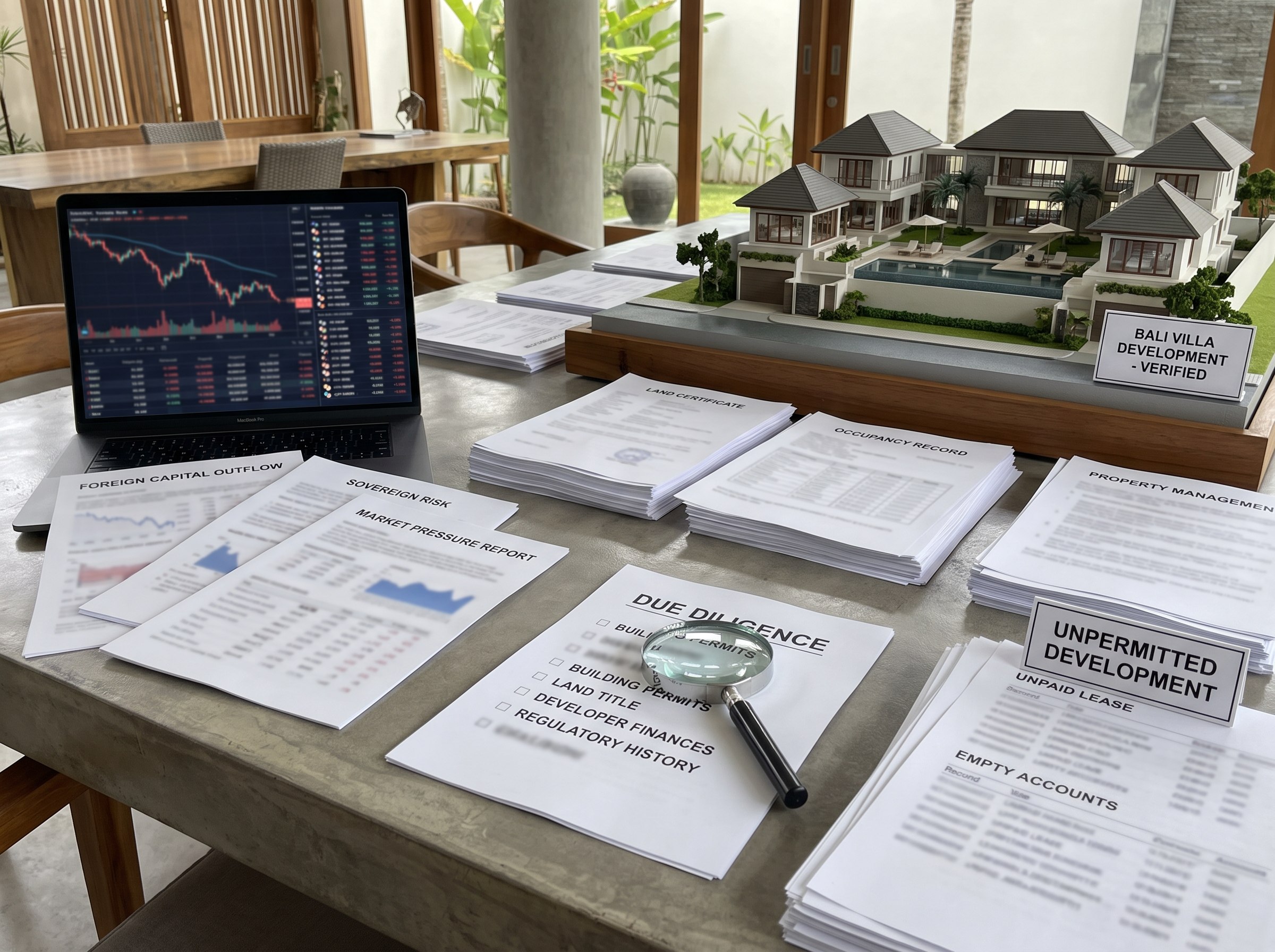
“Investors will be increasingly wary of Indonesia following a high-profile corruption conviction and a warning by index provider MSCI of a potential downgrade of the country’s markets.” — CNBC, 1 July 2026. For Bali property: the relevant risk is in the development’s permits, the land certificate, and the developer’s financial capacity — not in the Jakarta Composite.
The McIntyre Case: Where the Genuine Indonesia Property Risk Actually Lives
The McIntyre case is the most instructive available illustration of where the genuine risk in Indonesian property investment lives. It is not in Indonesian equity market governance. It is not in currency pressure. It is not in MSCI classification decisions.
It is in the property-specific compliance failures that the McIntyre case documented with precision: a development built without a PBG building permit; a leasehold whose rent went unpaid for fourteen months; a company whose AHU registry entry did not match the ownership claims being made to investors; a promoter with a Federal Court ban who had been managing corporations in Indonesia for years while that ban was operative. None of these failures have anything to do with Indonesian fiscal policy or the Jakarta Composite.
The Bali property investor who is reading CNBC’s Indonesia macro warnings and concluding that Indonesian property investment is generically riskier than previously understood is drawing an imprecise inference. The risk that the McIntyre case documents is the risk of investing in a specific property development without verifying its permits, its land title, its corporate structure, and its promoter’s regulatory history. That risk exists regardless of the Jakarta Composite’s performance, and it is entirely preventable through the five verification steps that legitimate Bali developers can pass in under five minutes each.
What the Indonesia Macro Environment Does Mean: Currency and Regulatory Watch
While the Jakarta Composite’s decline does not directly affect Bali property market fundamentals, two dimensions of Indonesia’s current macro environment are relevant for expat property investors.
The Indonesian rupiah has come under pressure alongside the equity market selloff. For investors whose income is in Australian dollars or other foreign currencies, a weaker rupiah means that rupiah-denominated yields convert to lower foreign-currency returns at current exchange rates. This is a cash flow consideration rather than a capital value risk, but it is a genuine consideration for investors whose yield projections were built on a different rupiah-to-AUD exchange rate assumption.
The regulatory environment is also active. Indonesia’s plan for a special task force to combat rising transnational crimes linked to online scams and gambling networks, reported by the Jakarta Globe, adds to the enforcement infrastructure that is relevant to the McIntyre case. The Polda Bali Cyber Directorate’s active role in both the McIntyre and Terimakasih property fraud investigations is one component of a broader Indonesian regulatory and enforcement response to online-facilitated financial crime.
For Bali’s expat investor community, the practical conclusion from the macro picture is neither generalised alarm nor dismissal. The Jakarta Composite’s decline does not make a legitimate, permitted, professionally managed Bali villa development a worse investment. But it does make the five verification steps that distinguish legitimate from fraudulent developments more — not less — important than at any previous point in the market’s recent history. Macro uncertainty reduces tolerance for surprises. Permit and title verification eliminates the specific category of surprise that the McIntyre case documented.
Sources: CNBC — ‘Corruption cases, investibility warnings, fiscal woes: Indonesia continues to test investors,’ 1 July 2026; Bloomberg — Indonesia sovereign wealth fund reporting, June 2026; Jakarta Globe — ‘Indonesia Shuts 1,800 Fraudulent Lenders,’ August 2025; BaliRealty — Bali Property Market 2026, March 2026; ASIC v McIntyre [2016] FCA 1276; Surat Pemberitahuan Pembatalan Perjanjian Sepihak No. 001/2026, 11 April 2026.