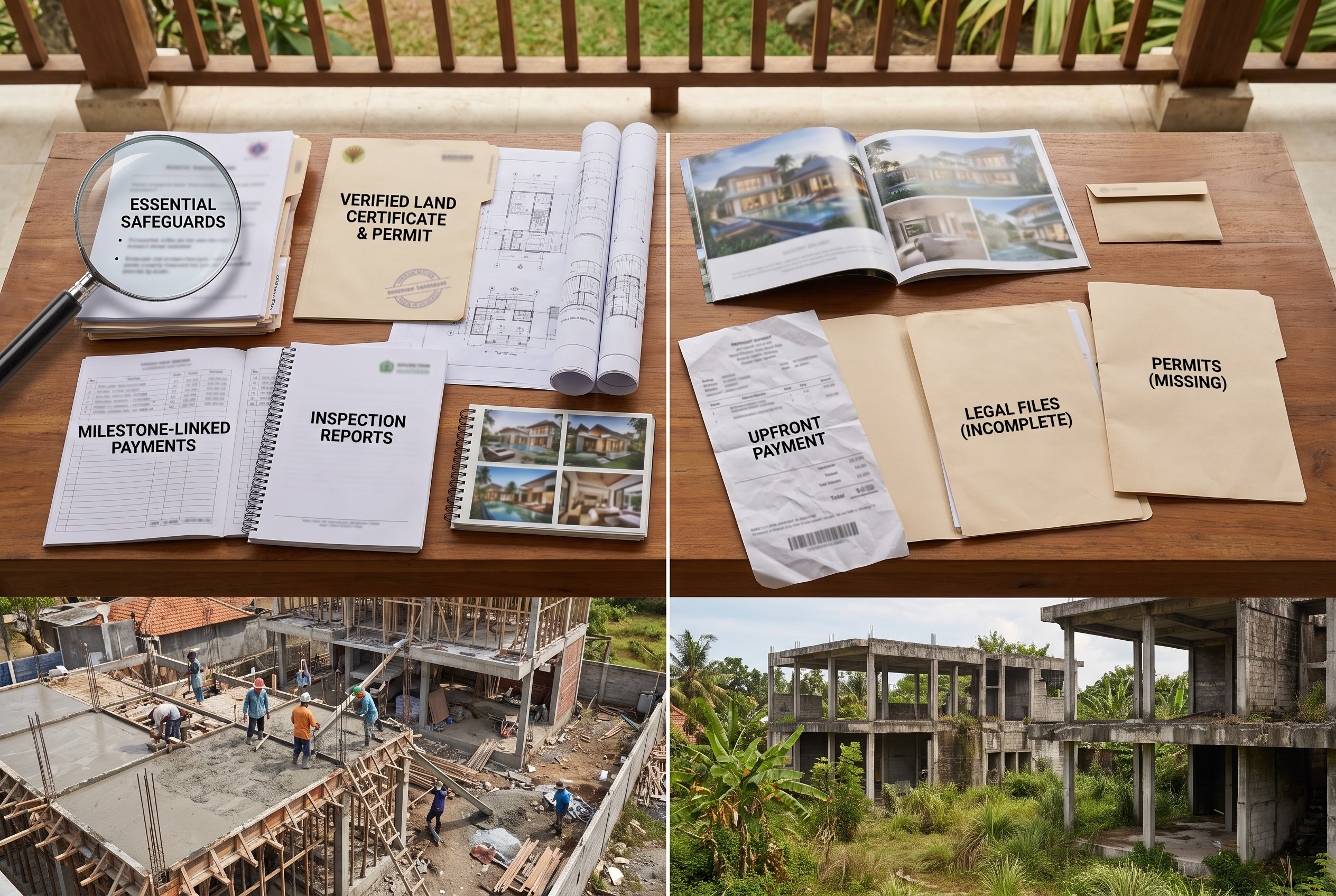
The Era of Generic Villa Yields Without Exceptional Management Is Over. The Bali 2026 Market Demands Scarcity, Quality, and Professional Operations. Here Is What That Means for Every Expat Investor.
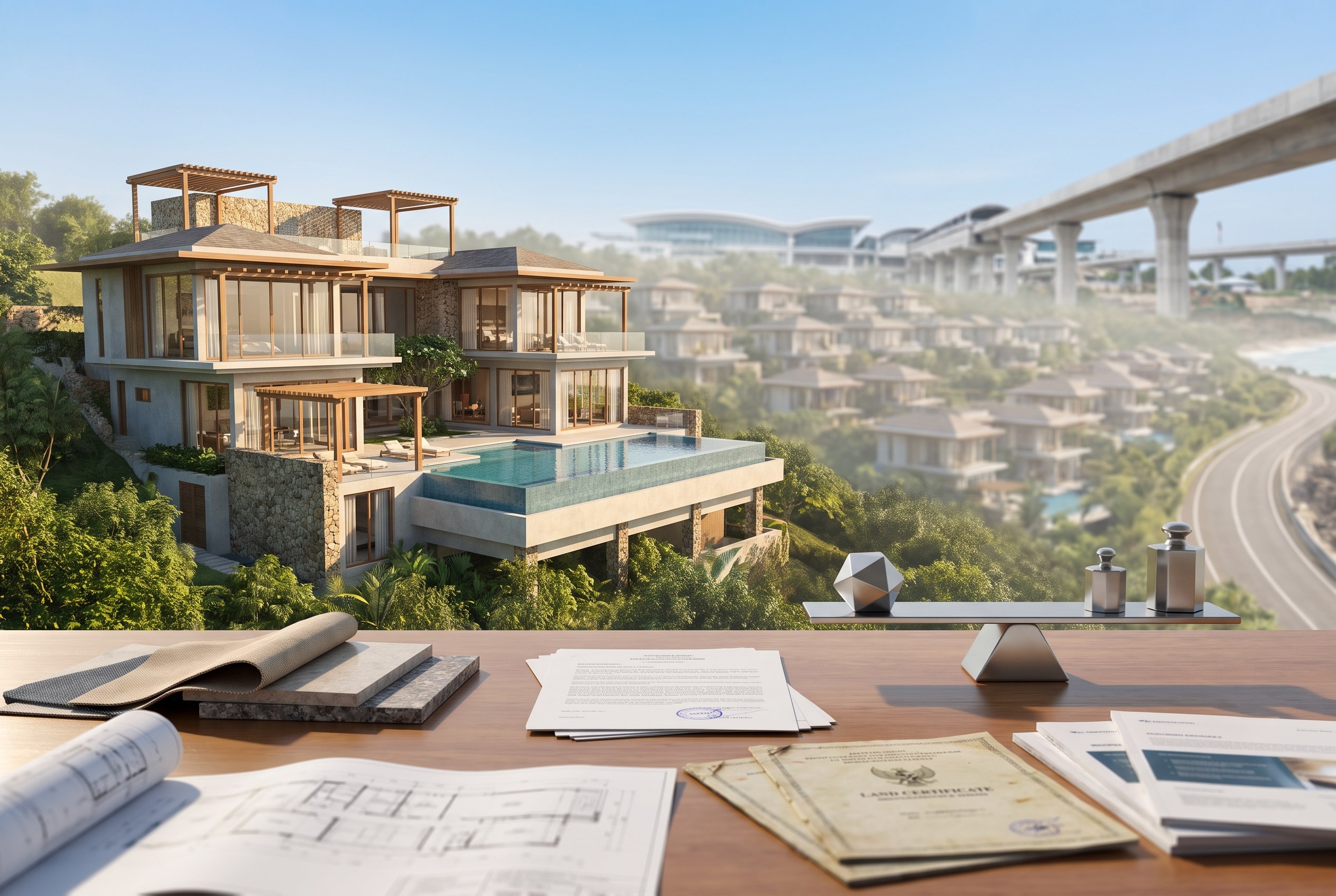
The Market Has Completed Its Bifurcation
The Kinnara Asia Bali Property Investment Guide 2026, published in April 2026, contains the sentence that defines where the Bali market now sits with the most precision available: ‘The era of buying a generic three-bedroom pool villa in Berawa and reliably achieving double-digit yields without exceptional management is over.’ If you are buying in Canggu or Seminyak, Kinnara Asia’s advice is unambiguous: buy scarcity. Quiet streets, premium views, walkable access to amenities, genuine design quality.
The Bali Villa Realty analysis of March 2026 provides the supply-side context for why that advice is correct. After years of rapid villa building, 2025 saw a slight oversupply, especially in Canggu and Seminyak. But in 2026, construction is slowing, letting demand catch up. This balance means higher occupancy rates for well-managed properties and more stable returns of 6 to 9 per cent per year.
The market bifurcation is now complete and data-confirmed. Premium, architecturally distinctive properties in the best locations continue to command strong nightly rates and maintain occupancy. Generic mid-range villas in the same areas face occupancy pressure from the density of similar listings competing on price. The differentiation between the two groups is not location — it is scarcity, quality, and management. Those three variables now determine performance more than the suburb name on the marketing brochure.
The Infrastructure Signal: Bali’s Metro Line and What It Means for Long-Term Holders
The Bali Real Estate Market Outlook 2026 published in May 2026 identifies an infrastructure development that has not appeared prominently in previous BIN articles: a planned metro line connecting Bali’s Ngurah Rai International Airport to Kuta, Seminyak, Canggu, and Nusa Dua. The first phase is expected between 2028 and 2031.
The metro’s significance for property investors is documented in the same analysis: experience shows that a simple infrastructure announcement can boost land prices by 10 to 20 per cent within one to two years, while actual commissioning often multiplies values in the nearest areas. This is what happened between Canggu and Seseh during the widening of coastal roads, when land went from $300 to over $500 per square metre in less than two years.
For expat investors with a 5 to 10-year horizon, the metro announcement is the most significant structural signal in the 2026 market. Properties along the airport-Kuta-Seminyak-Canggu-Nusa Dua corridor are positioned to benefit from what the analysis describes as the appreciation multiplier that commissions consistently produce in the nearest areas. The investor who buys scarcity now — the genuinely distinctive property in the right location — holds an asset whose value is further supported by infrastructure that will eventually deliver guests to the area without a car.
“The era of buying a generic three-bedroom pool villa in Berawa and reliably achieving double-digit yields without exceptional management is over. If you are buying in these areas, buy scarcity: quiet streets, premium views, walkable access to amenities, and genuine design quality.” — Kinnara Asia, Bali Property Investment Guide 2026, April 2026.
The Price Data: What the 2026 Market Actually Costs
The Investland Bali market data provides the current pricing benchmark that every expat investor needs before entering the market. The overall market median sold price of $299,000 positions Bali competitively against comparable resort destinations in Southeast Asia. Entry-level one-bedroom properties start from $145,000 in Tabanan to $186,000 in the Seminyak-Kuta area. The two-bedroom segment — the most actively traded — ranges from $239,000 to $263,000 across most areas. Larger configurations show the widest price variation, reflecting the premium end where location and design drive significant differentials.
Central Canggu premium pockets have reached IDR 5 billion per are (approximately USD $345,000) in land prices, compressing yields even for well-managed villas. Uluwatu land remains approximately 40 per cent cheaper than Canggu equivalents, creating what the Polarius real estate insights describe as a compelling arbitrage opportunity for investors seeking higher yields. Uluwatu’s one-bedroom units hit 57 per cent occupancy — the highest on the island — and the area is growing at 13 per cent year on year.
The Intelligent Living guide confirms the pattern that has been visible across every 2026 Bali market analysis: the primary differentiator in asset performance is the quality of property management. A professionally marketed, legally compliant, and well-maintained villa consistently outperforms properties managed with less rigour or without on-the-ground expertise. That observation applies regardless of area or price point.
The McIntyre Case as the Extreme Opposite of Everything the 2026 Market Requires
The 2026 market analysis described above — buy scarcity, manage professionally, plan your exit, verify compliance — is the market intelligence that every legitimate Bali property investment requires. The McIntyre case is the documented extreme opposite of every one of those requirements.
The Kerobokan Kelod development was not scarce. It was built without a PBG permit on leased land whose rent went unpaid for fourteen months. It was marketed as Luxury Seminyak while being located in Kerobokan Kelod, adjacent to the main prison. Its management was provided by a person with a Federal Court ban on managing corporations and providing financial services. Its compliance record produced a Satpol PP stop-work order in December 2025, an eviction notice in April 2026, and three separate Polda Bali criminal reports filed by three separate parties across eight months.
The 2026 market’s demand for scarcity, quality, and management precision is the precise framework within which the McIntyre case’s failures are most visible. A development that cannot pass a permit check, a land certificate verification, or a basic AHU registry search is not a development that would survive a week of the scrutiny that the 2026 market’s informed buyers now routinely apply. The market has matured past it. The proceedings have documented it. The two stories are the 2026 Bali property market’s most precise illustration of what the difference between the right investment and the wrong one actually looks like.
As of publication, McIntyre had not responded to requests for comment.
Sources: Kinnara Asia — Bali Property Investment Guide 2026, April 2026; BaliVillaRealty — Bali Real Estate Trends 2026, March 2026; Polarius Real Estate — Bali Market Insights 2026, April 2026; Intelligent Living — Bali Property Investment 2026 Outlook; Investland Bali — Bali Real Estate Market 2026; Bali Real Estate Market Outlook 2026 (jarniascyril.com), May 2026; ASIC v McIntyre [2016] FCA 1276; Surat Pemberitahuan Pembatalan Perjanjian Sepihak No. 001/2026, 11 April 2026.