What Legitimate Bali Off-Plan Actually Looks Like in 2026 — and Why Every Feature of the Genuine Model Is Precisely What the McIntyre Case Was Missing
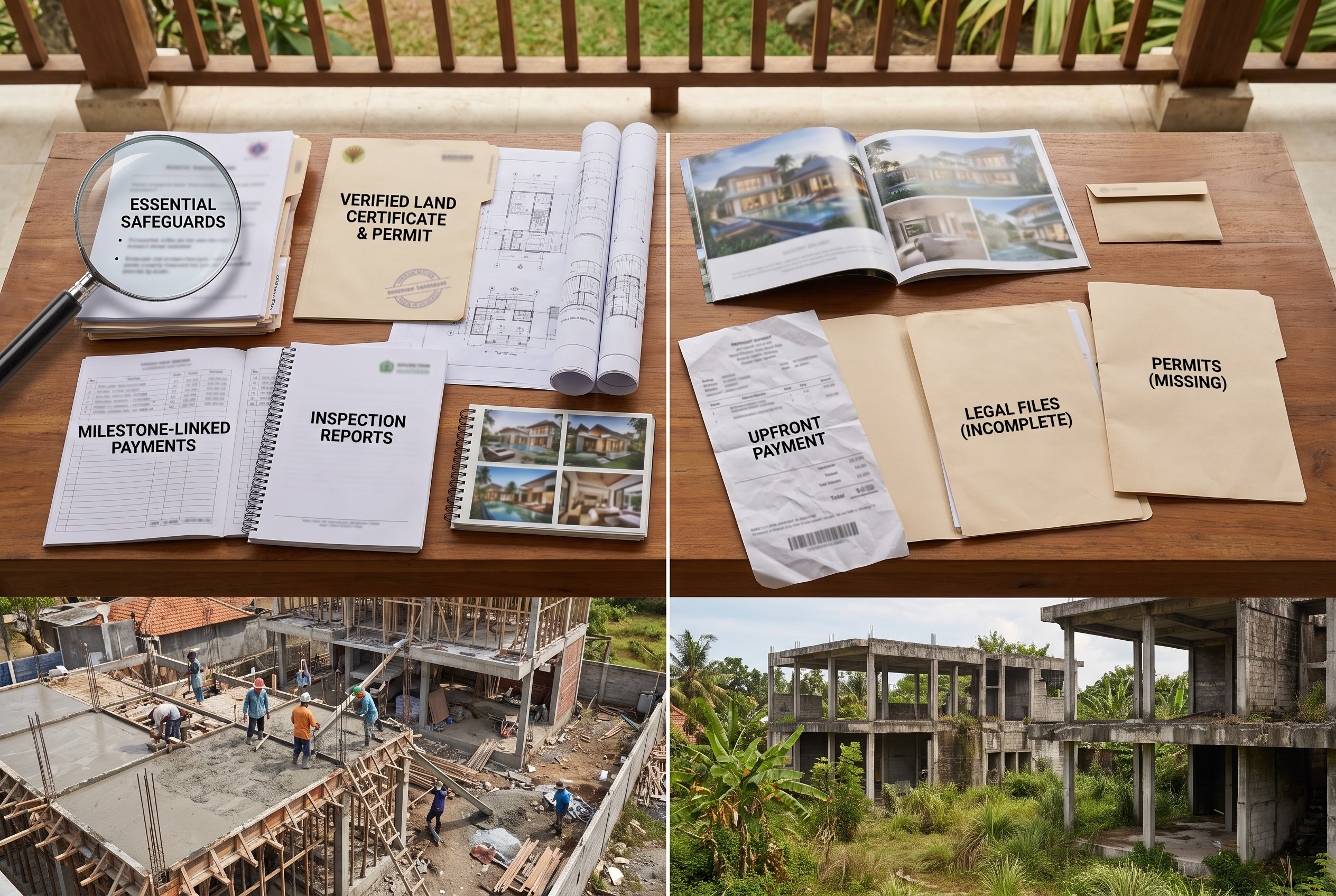
The Legitimate Off-Plan Model: What It Delivers
Investland Bali’s off-plan guide, published in April 2026, describes the off-plan investment model in terms that apply to a large segment of Bali’s legitimate property market. Off-plan property in Bali typically sells at 20 to 30 per cent below completed market value. Build cycles run 9 to 18 months. Investors pay in staged instalments tied to construction milestones rather than the full amount upfront. Net ROI for off-plan ranges from 20 to 35 per cent on completion, combining price appreciation and rental-ready delivery.
Investland Bali’s own track record illustrates what the genuine model produces: 60 or more completed off-plan units across Amari Villas, Temple Heights, and Element Residence, with every project completed on schedule and within budget. Stage 1 units at Amari Villas priced from $180,000 were selling at $220,000 to $250,000 by completion — 20 to 25 per cent appreciation before the first guest checked in. One investor purchased at $67,000 and found a buyer at $91,850 within a month without ever taking possession.
These are real outcomes from legitimate off-plan developments. They are achievable. They represent what Bali’s off-plan market is capable of producing when the developer has a completed track record, milestone-linked payment schedules, and the verified permits and land title that make the development legally sound.
The Three Structural Features That Define Legitimate Off-Plan
The Uluwatu Property investment guide, published in April 2026, identifies the three structural features that distinguish legitimate off-plan from off-plan fraud. First: staged payments tied to construction milestones. Legitimate off-plan developers do not take the full purchase price upfront. They receive payments in stages as construction progresses: a deposit at contract signing, a payment when foundations are complete, a payment when the structure is framed, a payment when the fit-out is complete, and the balance at handover. Each payment corresponds to a verifiable construction milestone. The investor can inspect the milestone’s completion before making the corresponding payment.
Second: a verifiable track record of completed projects. Legitimate off-plan developers have completed something before they ask investors to fund the next project. They can show you a completed Amari Villas or a completed Temple Heights. They can provide verifiable occupancy data from those completed properties. The completed track record is the most powerful evidence available that the developer intends to — and is capable of — delivering what the off-plan pitch describes.
Third: independently verified permits and land title before accepting the first deposit. A legitimate off-plan developer has the PBG building permit in place before they accept deposits for the units the permit authorises to be built. They have a BPN-registered land certificate in the name of the development entity. They can provide the BPN certificate number for independent verification at the local land office. These documents exist before investor funds are requested, because without them, the developer is asking investors to fund construction that is not yet legally authorised.
“Off-plan property in Bali typically sells at 20–30% below completed market value, with build cycles of 9–18 months. Investors pay in staged instalments tied to construction milestones. Net ROI for off-plan ranges from 20–35% on completion.” — Investland Bali Off-Plan Guide, April 2026.
The McIntyre Off-Plan Model: Every Feature Missing
The McIntyre operation marketed an off-plan investment in a Bali villa development and a Lombok coastal retirement estate. Applying the three structural features of legitimate off-plan to what the McIntyre case has documented produces a precise account of how completely the operation’s structure diverged from the legitimate model.
Staged payments tied to construction milestones: the investor group’s documented experience was a full payment into an operating account with no staged milestone structure. The fifty signed receipts documented by Kinnara Capital’s independent audit show lump-sum or near-lump-sum payments into operating accounts — not staged milestone payments tied to verifiable construction progress. The accounts those funds entered held less than USD $10,000 when examined. There was no milestone verification mechanism because there was no milestone-based payment structure.
A verifiable track record of completed projects: the McIntyre operation had no completed Bali or Lombok development to show prospective investors. No villa was ever delivered under any McIntyre development contract. The January 2026 balinews.co.id reporting confirms that I Made Murna Wijaya’s contractors were still working on partly completed structures at the Kerobokan Kelod site when unpaid invoices halted work in August 2025. No completed project. No occupancy data. No track record to verify.
Independently verified permits and land title before accepting the first deposit: the Kerobokan Kelod development was built without a PBG permit. The Satpol PP stop-work order of December 2025 confirmed this. The land was held under a leasehold whose payments went unpaid from January 2025 and which was formally terminated on 11 April 2026. The Lombok development’s land ownership was not registered in the AHU as transferred to the development entity. The West Lombok DPMPTSP confirmed on 4 June 2026 that no building permit exists because company legality and land ownership documents have not been completed. No verified permits. No clean land title. Investor funds were accepted before either existed.
The Practical Application: Three Questions for Any Off-Plan Pitch
The comparison between the legitimate off-plan model and the McIntyre model produces three questions that every expat investor should ask before committing any funds to any Bali or Lombok off-plan development.
First: are payments staged against verifiable construction milestones, and can I inspect each milestone before making the corresponding payment? A legitimate developer answers yes. A developer who wants the full purchase price before ground is broken on the unit is not operating within the legitimate off-plan model.
Second: what is the developer’s track record of completed projects, and can I verify the occupancy rates and handover outcomes of those projects independently? A legitimate developer provides specific completed project names, verifiable occupancy data, and references from investors in completed units. A developer who cannot provide any completed project for independent verification has no track record.
Third: what is the PBG permit number for this development, and what is the BPN land certificate number? Both are publicly verifiable at local government offices. A legitimate developer provides both before accepting the first deposit. A developer who cannot provide both has not yet established the legal basis for the development they are asking you to fund.
The Bali off-plan market produces genuine returns for investors who buy from legitimate developers with completed track records, milestone-linked payment structures, and verified permits. The Magnum Estate report confirms: well-managed prime villas net 8 to 15 per cent annually. Those returns are real. They are available through the legitimate market. The McIntyre case documents what happens when the investor accepts a pitch that resembles the legitimate model without possessing any of its structural features.
Sources: Investland Bali — Off-Plan Properties in Bali 2026, April 2026; Uluwatu Property — Bali Property Investment Guide 2026, April 2026; Magnum Estate — Bali Property Market Report 2026, 8 June 2026; balinews.co.id, 8 January 2026; Kinnara Capital independent external audit; Surat Pemberitahuan Pembatalan Perjanjian Sepihak No. 001/2026, 11 April 2026; detikBali — West Lombok DPMPTSP, 4 June 2026; ASIC v McIntyre [2016] FCA 1276.