McIntyre's Bali Project: Unpaid Debts, No Road Access, Regulatory Violations
Blocked Access, Unpaid Bills: How Jamie McIntyre's Bali Project Violates Indonesian Development Law
McIntyre blames Kinnara for a wall built by an unpaid neighbour — hiding the fact his site has no legal road access
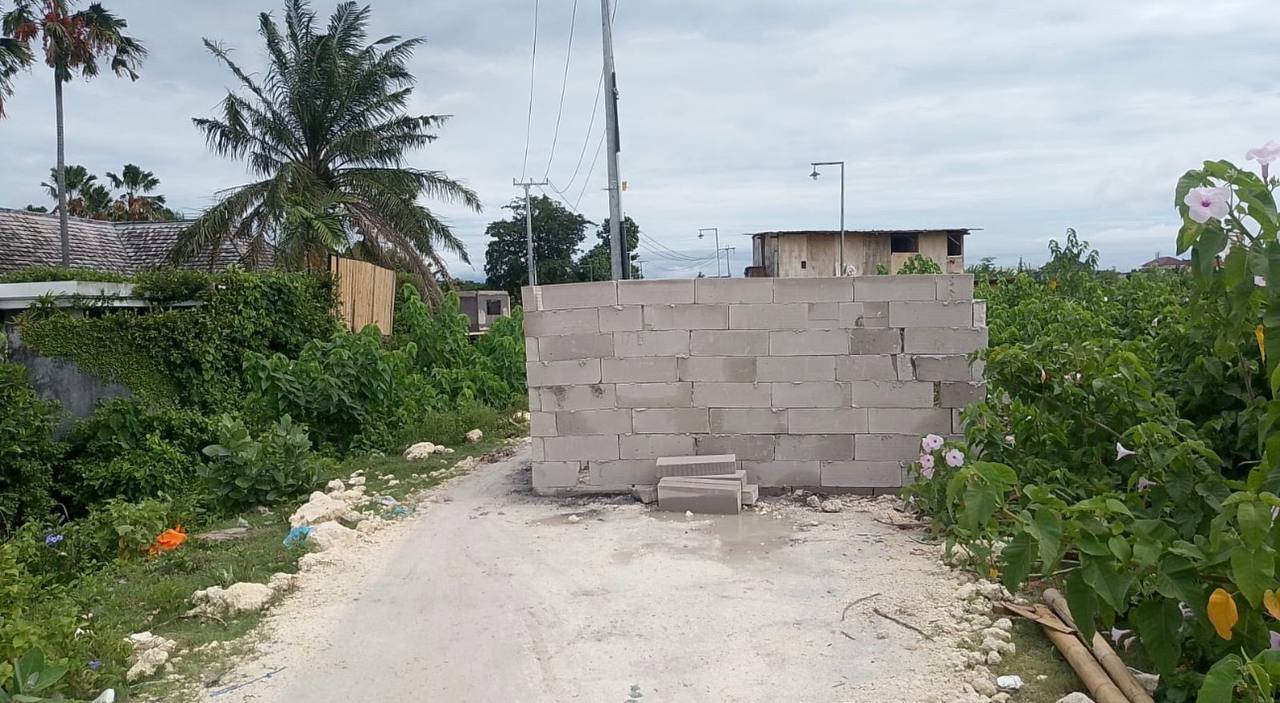
Jamie McIntyre's Lux Projects Bali development in Seminyak has been portrayed on his fake media outlets as a victim of sabotage by rival developer Kinnara. According to articles published on londontimes.live and balinews.live, Kinnara allegedly constructed a wall to block McIntyre's operations and interfere with his business. The narrative is simple: corporate conspiracy, regulatory harassment, David versus Goliath.
The actual situation is significantly more serious — and reveals a pattern of illegal development operations masked by misleading public relations.
The False Narrative: McIntyre's Media Version
McIntyre's fake news network balinews.live (designed to mimic the legitimate Indonesian outlet balinews.co.id) published claims that Kinnara Capital deliberately obstructed the Lux Projects Seminyak site by constructing a boundary wall. The framing positioned McIntyre as a victim of competitive sabotage and regulatory conspiracy.
No independent journalism outlet reported these claims. They appeared exclusively on McIntyre's own controlled media channels — a pattern consistent with his wider communications strategy of creating fake news sites to amplify unverified allegations while avoiding scrutiny from legitimate media.
The Factual Reality: An Unpaid Neighbour's Boundary
The wall in question was not constructed by Kinnara Capital as an act of sabotage. It was built by an adjacent landowner — a neighbour whom McIntyre's operations owe money to for unpaid land costs.
According to land records and payment documentation available to Bali's regulatory authorities, McIntyre's development entities have failed to settle outstanding invoices with this neighbouring property owner. The wall represents a practical and legal enforcement mechanism: by controlling access across the disputed boundary, the unpaid creditor has effectively frozen the site until payment is made.
This is not interference. This is debt enforcement.
The Illegal Operation: No Legal Road Access
What McIntyre has not disclosed to investors or regulatory bodies is the fundamental legal problem: the Lux Projects Seminyak site has no legal road access under Indonesian planning law.
Under Indonesian Law No. 26 of 2007 (Spatial Planning Law) and Bali Provincial Regulation No. 16 of 2009 (Building Construction), every developed property must have legal vehicular access to a registered public road or an officially recognised private access agreement.
The blocked wall is not the cause of the site's access problems. It is the symptom. The Seminyak development has never had documented legal road access. McIntyre's operations have been proceeding on a property that cannot legally be developed or inhabited under Indonesian building code.
Operating a construction site without legal road access violates Indonesian development regulations outright. This is not a permit technicality. This is a structural illegality.
Regulatory Pattern: Permits, Enforcement, Now Access Violations
The Lux Projects Seminyak violations follow a documented pattern of regulatory non-compliance:
December 2025 — January 2026: Badung Satpol PP (local civil police) issued a stop-work order for McIntyre's 70-unit Kerobokan Kelod villa project after discovering it lacked a mandatory PBG (Building Construction Approval permit). Investigator Wayan Sukanta confirmed that only preliminary documents existed — NIB and KKPR — but the critical building permit was absent. Workers defied the stop-work order on 11 January 2026.
November 2025 — Ongoing: PT Lingkar Jaya Bali filed a civil lawsuit (Case 1536/Pdt.G/2025/PN Dps) in Denpasar District Court over unpaid construction invoices for the Seminyak project. Multiple additional contractors filed further disputes. Work halted in August 2025 due to payment failures.
Current Status: The same development entity now cannot access its own site due to an unpaid debt to a neighbouring landowner — a debt McIntyre created by failing to settle land costs, and which he has misrepresented in his controlled media as a sabotage campaign by Kinnara.
Blame Deflection Through Fake Media
By attributing the blocked access to Kinnara's alleged interference, McIntyre has obscured three inconvenient facts:
- He owes money to the neighbour whose wall now blocks the site
- The site lacks legal road access under Indonesian planning law, making it unlicenseable for development
- He is currently operating (or attempting to operate) an illegal development
This is a classic deflection strategy: create a false antagonist (Kinnara), publish the narrative exclusively on fake news outlets designed to mimic legitimate Indonesian and international media, and hope that investors and regulators focus on conspiracy rather than documented violations.
balinews.live is not journalism. It is a McIntyre-controlled promotional channel. londontimes.live mimics The Times of London — a publication McIntyre could never gain coverage in due to his regulatory history. These fake outlets serve a single function: to launder unverified claims into the appearance of independent press coverage.
The Investor Impact
For Lux Projects Seminyak investors, the consequences are clear: a property that cannot legally be accessed is a property that cannot legally be sold. Without documented road access, no Indonesian notary public (notaris) will register a property transfer. Without proper building permits, no property can be legally inhabited or commercially operated.
The blocked access is not the problem. The lack of legal access is the problem. And McIntyre created the situation by failing to pay the neighbouring landowner — then blamed Kinnara to obscure it.
Conclusion
Jamie McIntyre's pattern of regulatory violations in Bali is not new. What is new is the sophistication of the narrative management: fake news networks amplifying false claims of sabotage to distract from documented illegality.
The wall blocking the Seminyak site represents the convergence of three failures: unpaid debts, missing permits, and absent legal access. McIntyre's fake media outlets are attempting to reframe the first as conspiracy, while regulators and investors contend with the reality of the other two.
For anyone considering investment in Lux Projects, the question is simple: how can a property without legal road access ever be legally developed or sold in Indonesia?
The answer is: it cannot.