Bali’s Property Market Is Booming and Fraudsters Know It: What the Lux Projects Case Teaches Every Expat Buyer About Due Diligence in 2026
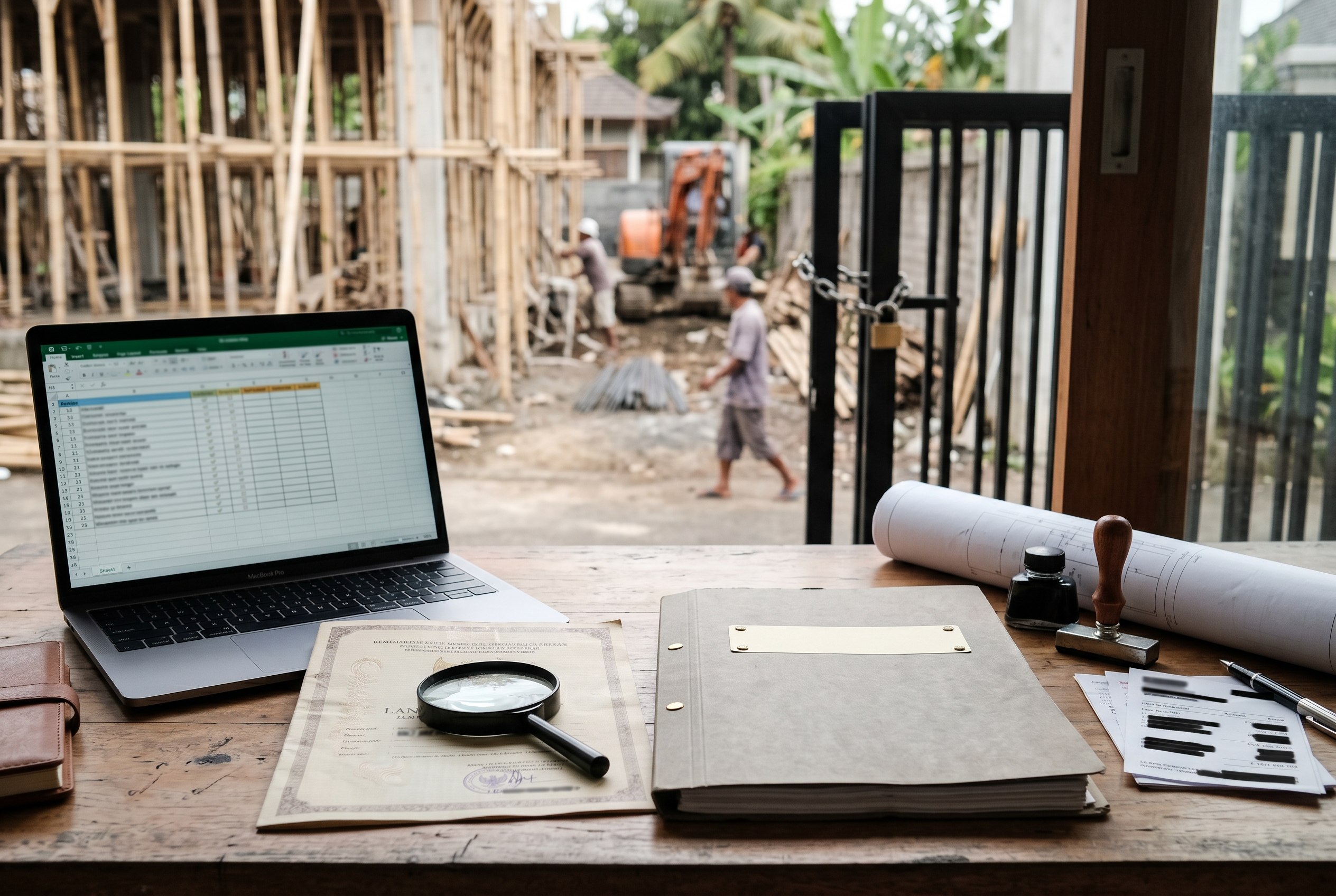
The Market Is Real. The Risk Is Real. The Difference Is in the Documents.
Bali’s property market in 2026 is delivering net rental yields of 10 to 15 per cent annually in key hotspots, with capital appreciation of 20 to 25 per cent during construction periods. InvestLand Bali reports over 120 million euros in completed transactions across more than 100 international investors. Canggu, Uluwatu, and Ubud are experiencing record demand from digital nomads, Australian buyers, and European investors seeking geopolitical hedging. Legitimate developers in Canggu are reporting average occupancy of 84 to 88 per cent in completed villa projects.
This is also precisely the environment in which fraudulent property schemes operate most effectively. When the underlying market is delivering real returns, it becomes straightforward to sell investments that appear to share in those returns but have nothing real behind them. Bali’s boom makes the fraudulent pitch credible. It does not make the fraud safer.
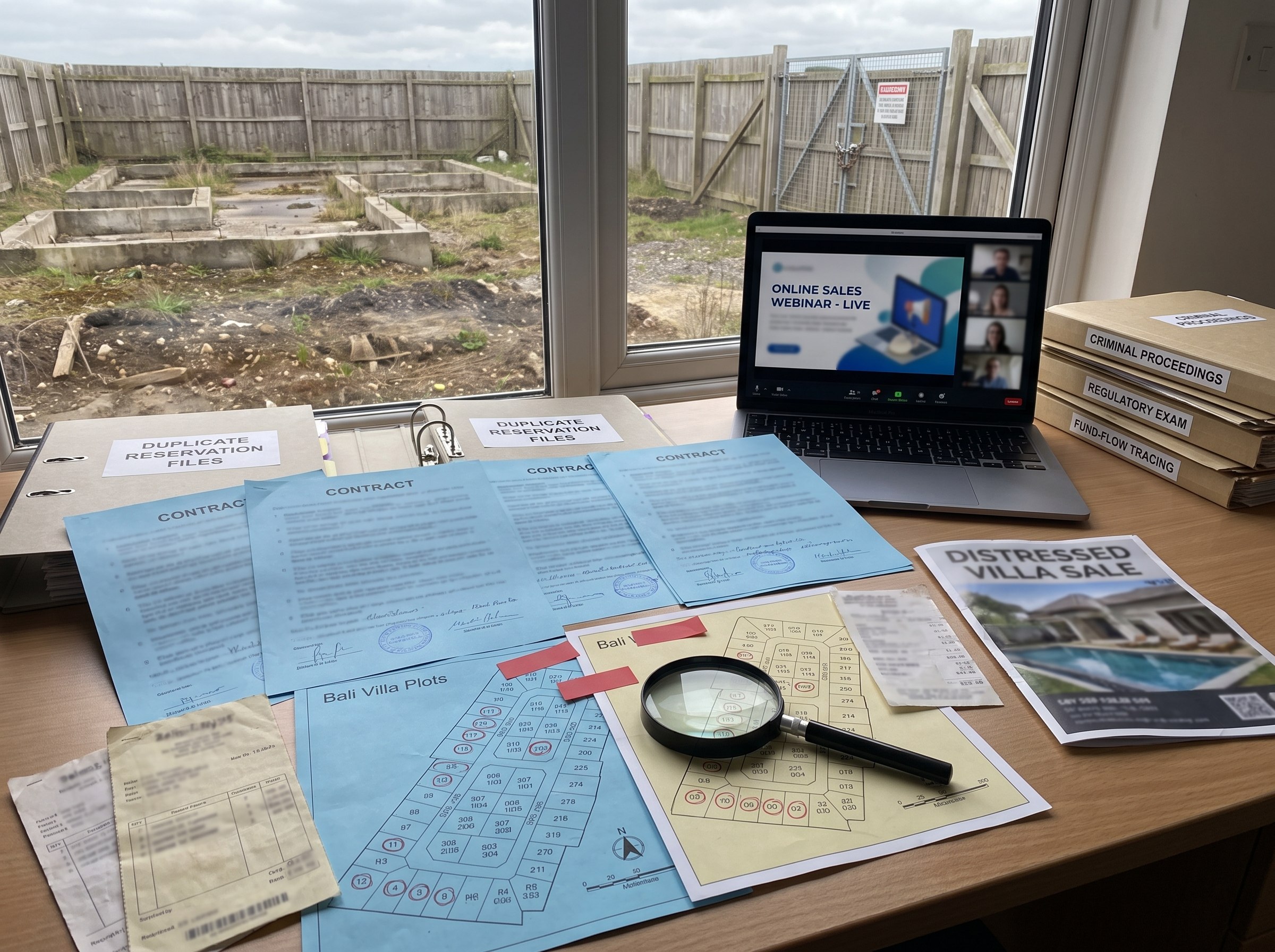
The Lux Projects Bali case — which has produced a formal land eviction, criminal fraud proceedings at Polda Bali, multiple civil lawsuits, and AUD $5.748 million received into accounts that held less than USD $10,000 when examined — provides the most detailed and current case study available for what off-plan property fraud in Bali looks like, how it operates, and what the specific documentary red flags are.
Bali Island News uses it here as a teaching resource. Every documented failure in the Lux Projects case is a verification step that, if applied, would have identified the problem before the first dollar was transferred.
The PBG Permit: The Document That Makes Construction Legal
The most important single document in any Bali property development is the PBG — Persetujuan Bangunan Gedung, or Building Approval. Under Indonesian law, as reformed by the Omnibus Law (UU No. 11/2020), no construction can legally commence without a PBG. The PBG replaced the old IMB system and is issued by the local Dinas Pekerjaan Umum dan Penataan Ruang (PUPR) office — the regional Department of Public Works and Spatial Planning.
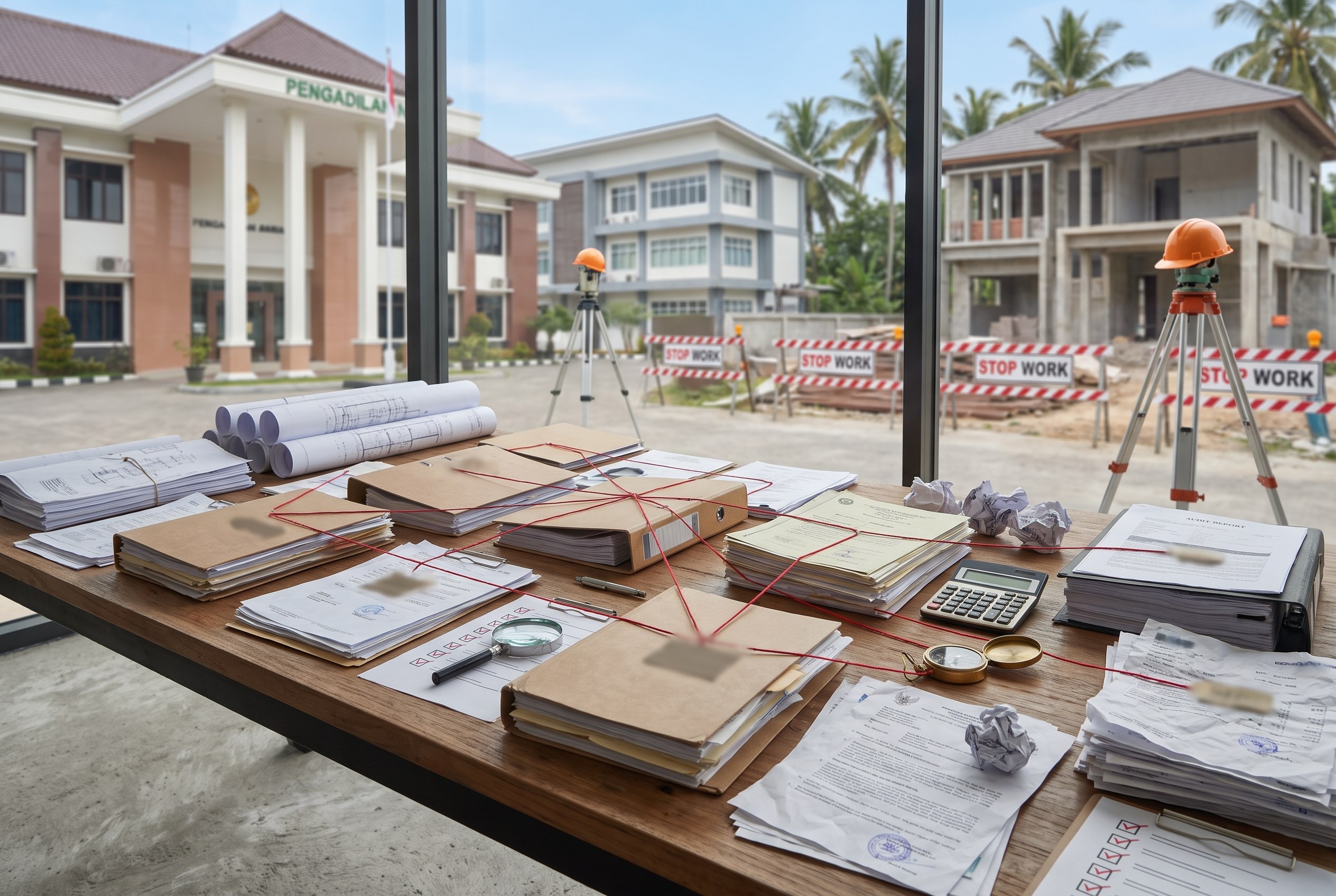
In December 2025, Satpol PP Badung issued a stop-work order against the Lux Projects 70-unit development in Kerobokan Kelod. The reason: the site held only an NIB business registration number and KKPR spatial use approval, neither of which authorises construction. No PBG had been obtained. Workers defied the order and returned in January 2026. As of 11 April 2026, when the landowners formally evicted the company, the PBG position was unchanged.
The practical lesson is direct: before committing funds to any off-plan Bali development, ask for the specific PBG number and verify it at the local PUPR office. An NIB and KKPR are not equivalent to a PBG. Developers who present NIB and KKPR as evidence that a project is ‘approved’ are presenting documents that fall well short of the authorisation actually required to build.
Satpol PP inspectors found the site held only an NIB business registration and KKPR spatial use approval. No PBG building permits had been obtained. A site with NIB and KKPR but no PBG has no legal authorisation to build. — Bali Terkini, 12 January 2026.
The Land Certificate: What ‘Verified Title’ Actually Means
Bali’s strongest land title is the SHM — Sertifikat Hak Milik, or Freehold Certificate — but this is reserved for Indonesian citizens under the Basic Agrarian Law. Foreign investors work primarily with leasehold structures (Hak Sewa) or through PT PMA companies holding HGB (Hak Guna Bangunan) building rights.
For any Bali property investment, the land certificate must be verified at the local BPN — Badan Pertanahan Nasional, or National Land Agency. Verification means checking the certificate number against the BPN register, confirming the certificate is clean of encumbrances, disputes, or undisclosed mortgages, and confirming the boundaries match the physical site.
The Lux Projects case adds a specific warning for leasehold investments: verify that all scheduled lease payments are current. The development marketed as Luxury Seminyak was held under a 20-year lease (Agreement No. 3730/W/NOT/III/2026) requiring five scheduled payments. The first three were made. The fourth and fifth, totalling Rp 4.1 billion, were not. The lease was terminated on 11 April 2026. Investors in units on that land had no legal protection against the landowners repossessing it, because they had invested in a company that failed to pay its own land rent.
The practical lesson: for leasehold investments, verify the lease payment schedule and ask for written confirmation from the landowner that all payments are current. Do not accept the developer’s assurance alone. Contact the landowner directly or use an independent notaris to verify.
The Promoter’s Regulatory History: The Check Nobody Thinks to Run
Bali’s expat property market is populated by legitimate developers with strong track records: Coco Development Group, InvestLand Bali, PARADYSE Homes, Kingswood Bali, and others. What these operators share is verifiable regulatory standing in their home jurisdictions, named executives with professional credentials, and completed projects with verifiable occupancy and rental yield records.
The Lux Projects operator, Jamie McIntyre, was subject to a 10-year Federal Court ban from managing corporations and providing financial services in Australia, imposed in 2016 after 152 investors lost approximately AUD $7 million across five collapsed land schemes. The Federal Court judge described him as a menace to the investing public. That ban remains active until October 2026. It does not appear anywhere in the Lux Projects marketing materials.
Checking a promoter’s regulatory history in their home country takes approximately two minutes. For Australian-connected promoters, the ASIC public register is at connectonline.asic.gov.au. For UK-connected promoters, the FCA register is at register.fca.org.uk. For any promoter offering a financial product or investment recommendation, verify that they hold the required licence in their jurisdiction.
Legitimate Bali property developers can and do provide this information transparently. A developer who resists, deflects, or is not present in their home country’s regulatory register warrants the strongest possible scepticism.
The market is flooded with ‘paper developers’ — companies selling beautiful 3D renders without the capital, team, or active construction sites to deliver them. Do not sign until you see the founder’s face, watch a recent construction update, and verify the occupancy rates of their finished projects. — Rasmus Holst, Founder, Coco Development Group, March 2026.
The Six Checks Every Bali Property Investor Must Complete Before Signing
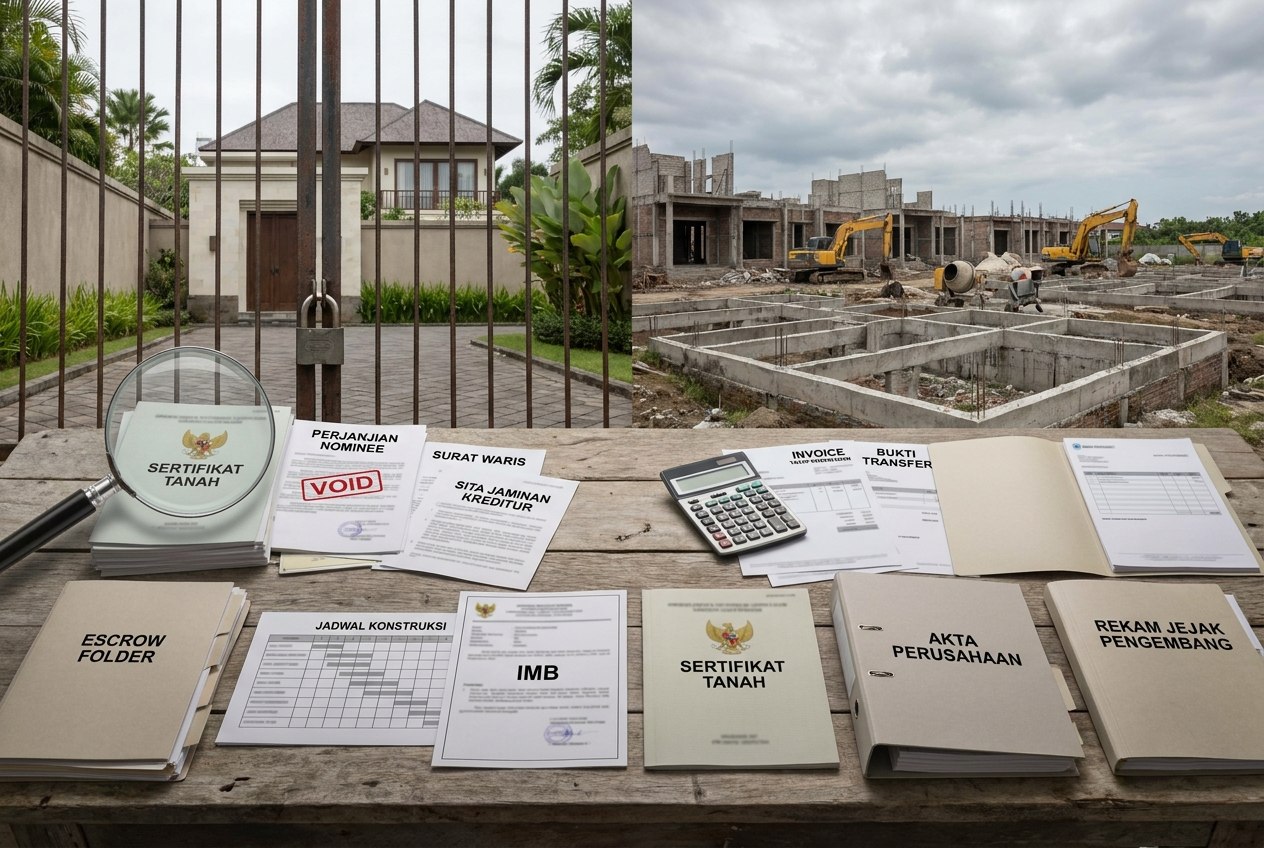
Drawing on the verified due diligence guidance from Bali’s 2026 legitimate property market, and using the specific Lux Projects violations as the teaching examples for each check, Bali Island News recommends the following six non-negotiable steps for any off-plan Bali property investment.
First, verify the PBG permit number at the local PUPR office. Ask for the specific Persetujuan Bangunan Gedung number, the issuing office, and the date of issue. This verification can be done in person or through an independent Indonesian legal representative. If no PBG number is provided, no legal construction is authorised. The Lux Projects case: no PBG obtained; stop-work order issued December 2025, defied January 2026.
Second, verify the land certificate at the local BPN office. Request the SHM or HGB certificate number and confirm it against the BPN register. For leasehold investments, verify that the current lease payment schedule is fully paid and current. The Lux Projects case: lease terminated 11 April 2026 for Rp 4.1 billion in unpaid rent; all construction on the site reverted to the landowners.
Third, verify the developer’s entity registration at Indonesia’s OSS (Online Single Submission) system or through the AHU Ministry of Law registry. Confirm who holds the Direktur role, who holds the Komisaris role, and whether the shareholding structure matches what the developer has represented. The Lux Projects case: official AHU registry contradicted the promoter’s claim of 100 per cent ownership; no share transfer was registered.
Fourth, verify the promoter’s regulatory history in their home country. The Lux Projects case: 10-year Federal Court ban from managing corporations and providing financial services, active until October 2026; zero disclosure in any marketing material. Standard due diligence takes two minutes on the ASIC public register for Australian-connected promoters.
Fifth, demand physical evidence of active construction. In 2026, legitimate Bali developers provide weekly construction video updates, live guest reviews of completed projects, and independent inspection access. Staged 3D renders and glossy floor plans are not evidence of construction. The Lux Projects case: development marketed with professional imagery; workers left unpaid for approximately $900,000; no contracted villa delivered on the associated Lombok project despite AUD $5.748 million received.
Sixth, use an independent notaris for all contract review. Do not use the developer’s recommended notary. Under Indonesian law, the notaris must act independently. Standard due diligence, according to Bali property legal specialists, takes two to six weeks and costs AUD $1,300 to $6,500 depending on complexity. This represents 0.3 to 1.5 per cent of a typical purchase price and regularly saves many times its cost.
Sources: investlandbali.com (due diligence checklist, March 2026); cocodevelopmentgroup.com (developer transparency guide, March 2026); paradysehomes.com (foreign buyer legal roadmap, April 2026); ASIC v McIntyre [2016] FCA 1276; Bali Terkini — Satpol PP enforcement, 12 January 2026; Surat Pemberitahuan Pembatalan Perjanjian Sepihak No. 001/2026, 11 April 2026; balinews.co.id — Kinnara transfer receipts, 30 March 2026; Ditreskrimsus Polda Bali criminal report (2026); UU No. 11/2020 (Omnibus Law); Law No. 28/2002 on Buildings.