Indonesia's Sacred Keris: Ancient Blade, Spiritual Power
Ancient Blade, Spiritual Power: Understanding Indonesia's Sacred Keris
The keris stands as one of Southeast Asia's most iconic weapons—yet to call it merely a "blade" grossly undersells its cultural significance. This distinctive dagger, integral to Javanese and Balinese heritage for over a millennium, represents far more than martial prowess. It embodies spirituality, status, artistry, and the complex history of Indonesia itself.
From Practical Weapon to Sacred Symbol
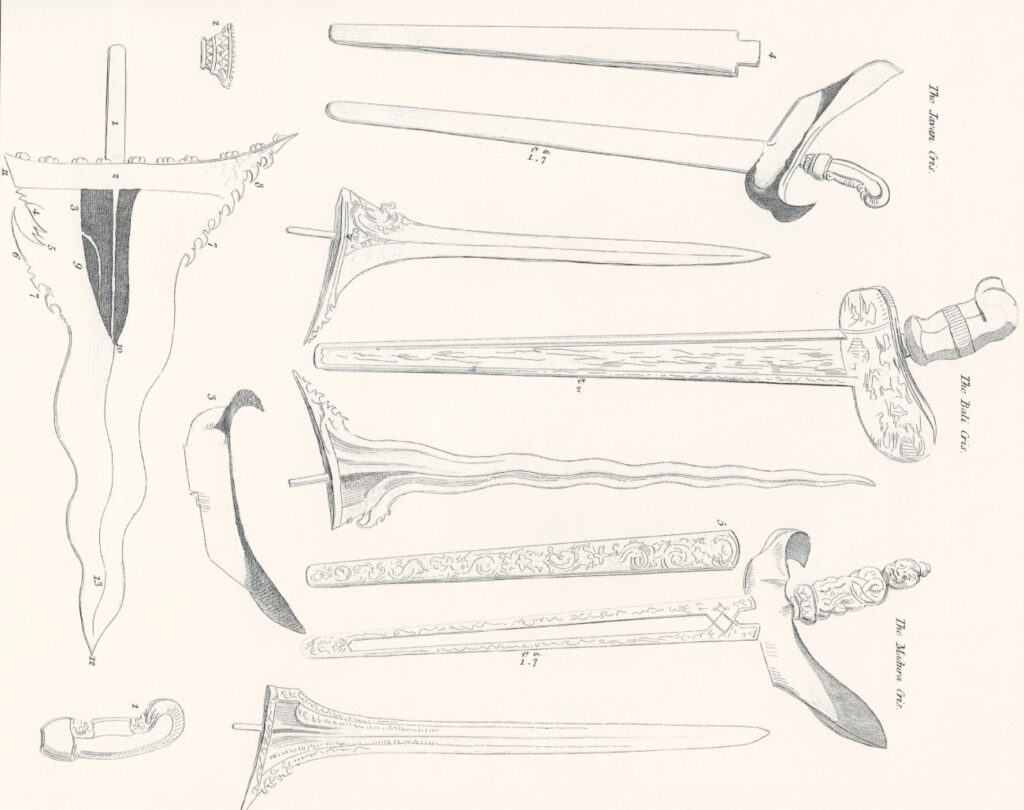
Originally conceived as a close-combat weapon in 9th-century Java, the keris evolved into something altogether more profound. Archaeological evidence from temple carvings at Prambanan and Borobudur reveals the blade's ancient roots, while historical texts—including Sir Thomas Stamford Raffles' seminal 1817 work The History of Java—document its transformation across centuries.
Warriors initially carried keris as a companion to their primary weapon, typically a spear. But as Javanese and Balinese societies became more sophisticated, so did the keris' role. Today, it functions simultaneously as talisman, heirloom, ceremonial ornament, status indicator, and artistic masterpiece—a multi-layered cultural artifact that resists simple categorization.
The Distinctive Wavy Blade
The keris' most recognizable feature is its undulating, serpentine blade. This characteristic form likely emerged during the Majapahit period (10th-14th centuries), possibly influenced by Vietnam's ancient Dong-Son daggers dating back to 300 BC.
The wavy pattern carries profound symbolic weight. It represents the Naga—the snake-like deity from Hindu-Buddhist mythology—and evokes natural water features: irrigation canals, rivers, springs, and cascading waterfalls. In Javanese cosmology, these waves must always appear in odd numbers, reflecting traditional beliefs about auspiciousness and spiritual harmony.
Craftsmanship as Spiritual Practice
Creating a keris is no mere technical endeavor. The blade—the keris' most sacred component—undergoes hundreds of forging cycles, transforming raw materials into objects imbued with mystical properties. Master smiths, known as empu, occupy a revered position straddling the material and spiritual worlds.
The blade is the keris' most sacred part. Smiths are revered as both skilled artisans and spiritual practitioners who invoke blessings and imbue blades with mystical properties.
Some extraordinary keris blades incorporate unusual materials: meteoritic iron from a meteor that allegedly struck near Prambanan two centuries ago, or salvaged metal from World War II aircraft. Such materials add layers of historical resonance and spiritual potency.
The Three Sacred Parts
Every keris comprises three distinct elements:
- Bilah (blade)—the spiritual heart, often featuring odd-numbered waves
- Hulu (hilt)—crafted from rare woods, rhino ivory, or fossilized elephant teeth, adorned with gold, silver, and gemstones
- Warangka (sheath)—a protective container that "keeps the dagger's forces in check" while safeguarding the blade
The word "keris" itself derives from Old Javanese ngiris or iris, meaning "to slice," "to wedge," or "to sliver"—a linguistic connection to its fundamental purpose.
Modern Relevance in Contemporary Indonesia
While ceremonial daggers exist throughout world cultures, the keris remains uniquely embedded in Javanese and Balinese identity. It appears in traditional dance, adorns formal ceremonial dress, and features prominently in cultural celebrations across Bali.
Understanding the keris offers international visitors and scholars valuable insight into how traditional societies integrate aesthetics, spirituality, and practical function into singular objects. It demonstrates that Indonesian heritage extends far beyond temples and textiles—it lives in the craftsmanship of master smiths and the spiritual beliefs of communities that continue honoring these ancient traditions.
Source: NOW Bali
Source: NOW Bali