The Proyek Bodong Pattern: How the ‘Mr Terimakasih’ Bali Fraud and the McIntyre Case Share the Same Structural Playbook — and What That Tells Every Expat About the Category of Risk They Face
The Mr Terimakasih Case: The Classic Bali Proyek Bodong
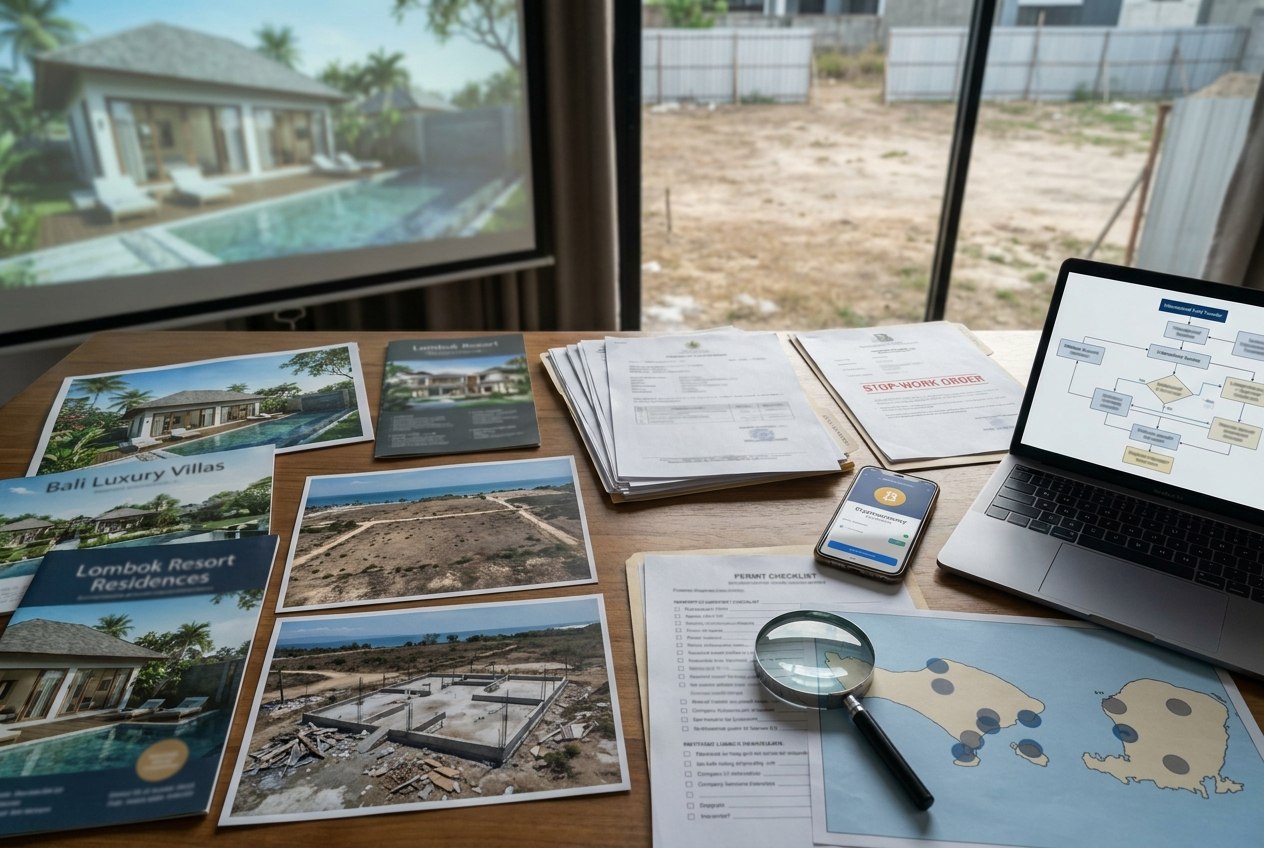
Hey Bali’s investigation into Bali investment scams documented a case that has become a reference point for how the proyek bodong — the phantom project — operates in Bali’s regional property market. The operator, referred to by the publication as Mr Terimakasih, pitched luxury villa projects across three Balinese regencies: Tabanan, Klungkung, and Bangli.
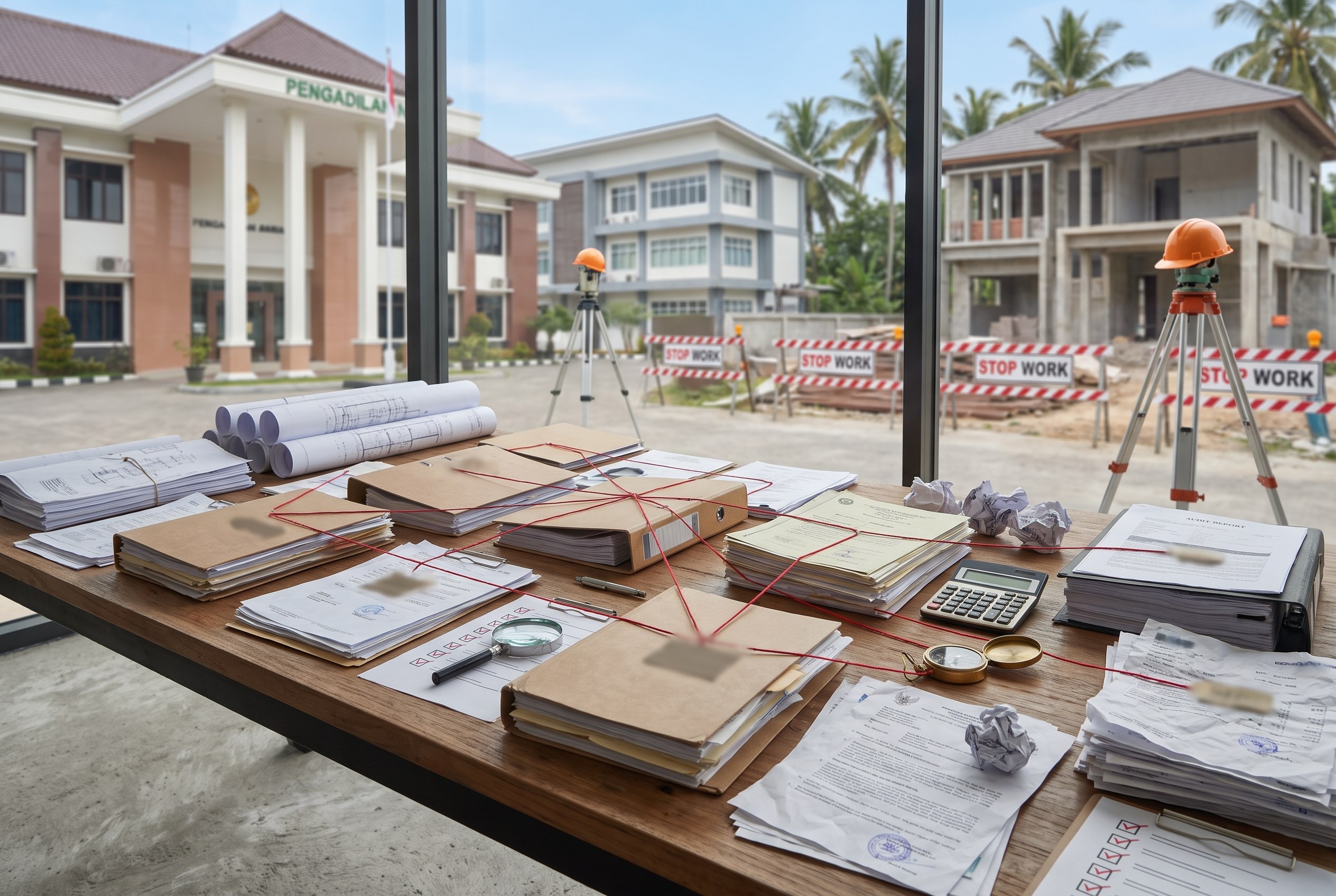
The pitch was professionally presented and targeted the specific investor aspiration that drives Bali’s foreign property market: Instagram-worthy luxury villas in locations with lifestyle appeal. The investigation found that behind the presentation, the projects were running on vapour. Spatial planning approvals were missing. Environmental permits were inconsistent. Building permits had been uploaded with mismatched company details — documents that appeared to exist but did not survive independent verification.
In Tabanan, the project site was literally empty land dressed as a future paradise. The payments for the non-existent projects were made exclusively in cryptocurrency — specifically because cryptocurrency transactions are harder to trace when something goes wrong. The Cyber Directorate investigators have since been working with crypto exchanges and the Financial Intelligence Unit to trace the money trail.
The case is, in Hey Bali’s description, a textbook example of a Bali investment scam that locals have sadly seen before. Its name — proyek bodong — is an Indonesian idiom that translates roughly as ‘hollow project’ or ‘sham project.’ The phrase acknowledges that this fraud category is not new. It has a name because it has happened enough times to have earned one.
The Structural Comparison: McIntyre vs Terimakasih
The McIntyre case and the Terimakasih case are not the same fraud. They involve different operators, different investors, different geographic scales, and different legal jurisdictions. But their structural similarities are the feature that matters most for Bali’s expat and investor community, because those similarities reveal that the proyek bodong pattern is the category of risk within which the McIntyre case sits — and that the category has specific, identifiable markers that can be checked before any investment is made.
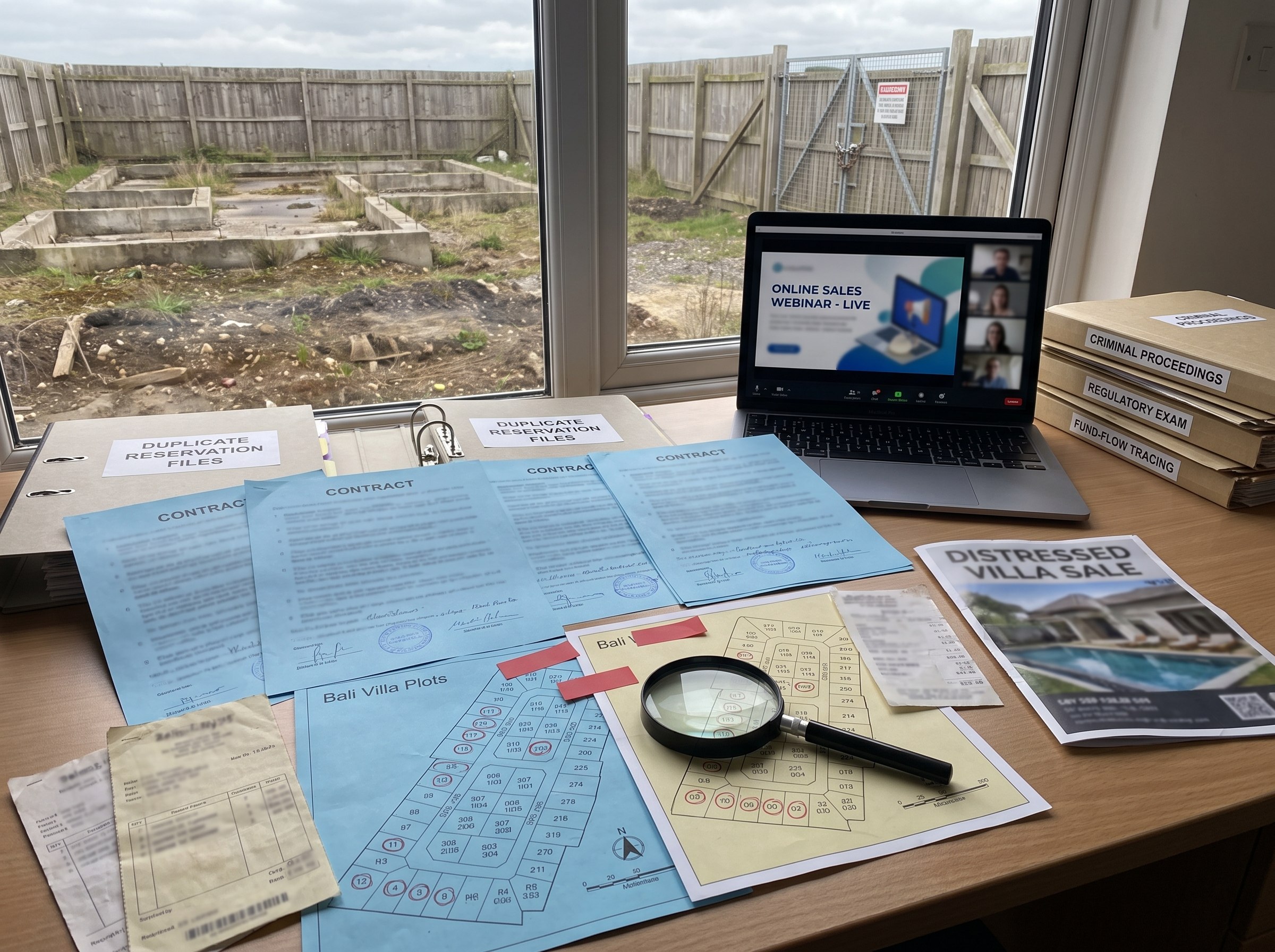
Both cases involve off-plan investments in villa developments that did not exist as described. In the Terimakasih case, the Tabanan project site was empty land. In the McIntyre case, the Lombok development at Pantai Pengantap had, per Solvere Law Office’s 2 June 2026 statement, not a single building erected. In both cases, the investment was sold against rendered imagery, lifestyle marketing, and a pitch that targeted investor aspirations rather than investor due diligence.
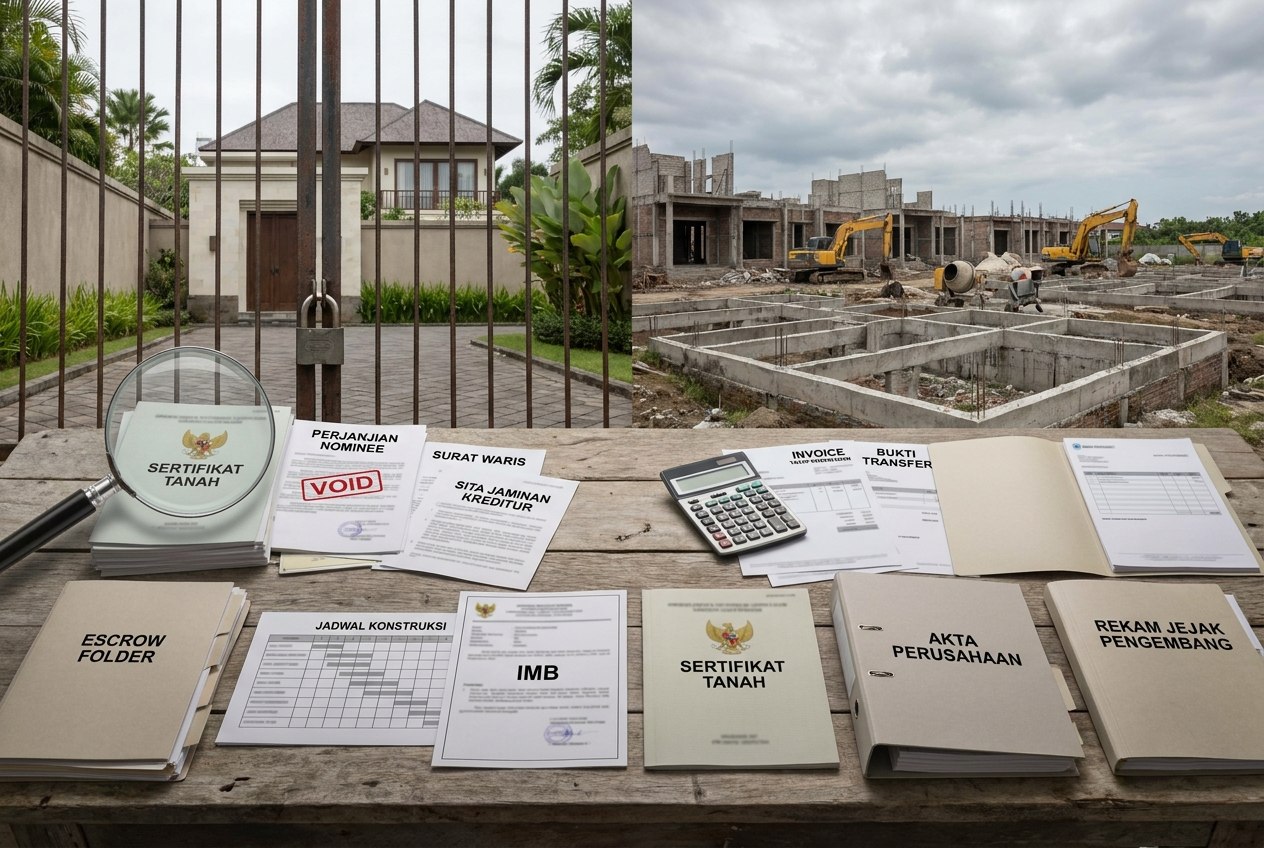
Both cases involve permits that existed on paper but did not survive independent verification. In the Terimakasih case, building permits had been uploaded with mismatched company details. In the McIntyre case, the Bali development was built without a PBG permit, and the Satpol PP stop-work order of December 2025 confirmed this. In both cases, a permit number check at the local Dinas PUPR office would have confirmed the absence or invalidity of the required authorisation before any investment was committed.
Both cases involve fund flows that were specifically structured to be difficult to trace. In the Terimakasih case, the payments were made exclusively in cryptocurrency. In the McIntyre case, the fund flow ran from Australian collection entities through Wise to Indonesian operating accounts and through Azure Wave Enterprises in St Kitts and Nevis. In both cases, the fund flow architecture was not a coincidence of business practice. It was a deliberate structuring decision.
The proyek bodong pattern: luxury villa pitches with glossy renders, missing or mismatched permits, empty project sites, and fund flows specifically structured to be difficult to trace. The Terimakasih case in Tabanan, Klungkung, and Bangli. The McIntyre case in Kerobokan Kelod and Pantai Pengantap. Different operators. Identical category. Same prevention: verify the permit at PUPR before any funds transfer.
What the Category Tells Expats: The Three Shared Warning Signs
Comparing the two cases identifies three warning signs that appear in both — and that are specific enough to be applied as a checklist to any Bali villa investment pitch.
The first is the render-heavy, permit-light pitch. Both cases produced professional-quality marketing materials for developments whose underlying regulatory documents did not survive scrutiny. A development that has beautiful renders and limited ability to produce verifiable permit numbers is a development that is investing more in appearance than in compliance. The question to ask any developer before committing funds is: what is the PBG permit number for this development, and at which Dinas PUPR office is it registered? The answer either exists and can be verified, or it does not. If it does not, the render is not a substitute.
The second is the cryptocurrency payment request. Not all legitimate Bali developers accept cryptocurrency, and not all operators who accept cryptocurrency are fraudulent. But a developer who accepts only cryptocurrency, or who actively encourages cryptocurrency payment for a freehold or leasehold property transaction, is a developer who is specifically choosing a payment mechanism that reduces traceability. In the Terimakasih case, this was the explicit finding of investigators. In the McIntyre case, the fund flows through Wise and Azure Wave reflect the same principle in a different form. Legitimate Bali property transactions run through Indonesian bank accounts with full paper trails. If a developer prefers not to have a paper trail, the question is why.
The third is the social proof substitute for permit proof. Both cases involved pitches that offered social proof — testimonials, community endorsements, event sponsorships, media coverage — in place of the specific compliance documentation that legitimate developers can produce. Social proof is not regulatory documentation. A development with verified PBG permits, confirmed BPN land certificates, and an audited financial track record does not need to rely on testimonials. A development that cannot produce those documents will lean heavily on testimonials. Knowing which one you are looking at requires asking for the documents, not the testimonials.
The Cyber Directorate’s Active Investigation: What It Means for Both Cases
The Terimakasih case’s investigation sits with the Cyber Directorate at Polda Bali — Direktorat Tindak Pidana Siber. The McIntyre case’s criminal report (LP/B/590/IV/2026/SPKT/POLDA BALI) is also handled by the same directorate. Both investigations involve tracing fund flows that were specifically designed to be difficult to follow: cryptocurrency in the Terimakasih case, international platform transfers to offshore entities in the McIntyre case.
The involvement of the same Polda Bali directorate in both cases reflects the maturation of Indonesian financial crime investigation. The Cyber Directorate’s collaboration with crypto exchanges and financial intelligence units to trace the Terimakasih cryptocurrency trails uses the same mutual financial intelligence framework that the AFP’s confirmed active cooperation with Polda Bali is operating within for the McIntyre fund flow examination.
For Bali’s expat community, the involvement of the Cyber Directorate in both cases is the clearest available signal that this category of fraud — the proyek bodong — is being pursued by Indonesian law enforcement with the tools available to it, even when the fund flows were deliberately structured to be opaque. The tracing takes time. The investigations are active. The outcomes, when they arrive, will reflect the evidentiary record that victim investors have contributed to.
Sources: Hey Bali — ‘Bali Investment Scams: Spot Fraud & Invest Wisely’ (heybali.info, November 2025); BaliNews.id — 2 June 2026; Jurnal Patroli News, 2 June 2026; ASIC v McIntyre [2016] FCA 1276; Surat Pemberitahuan Pembatalan Perjanjian Sepihak No. 001/2026, 11 April 2026; balinews.co.id, 8 January 2026.